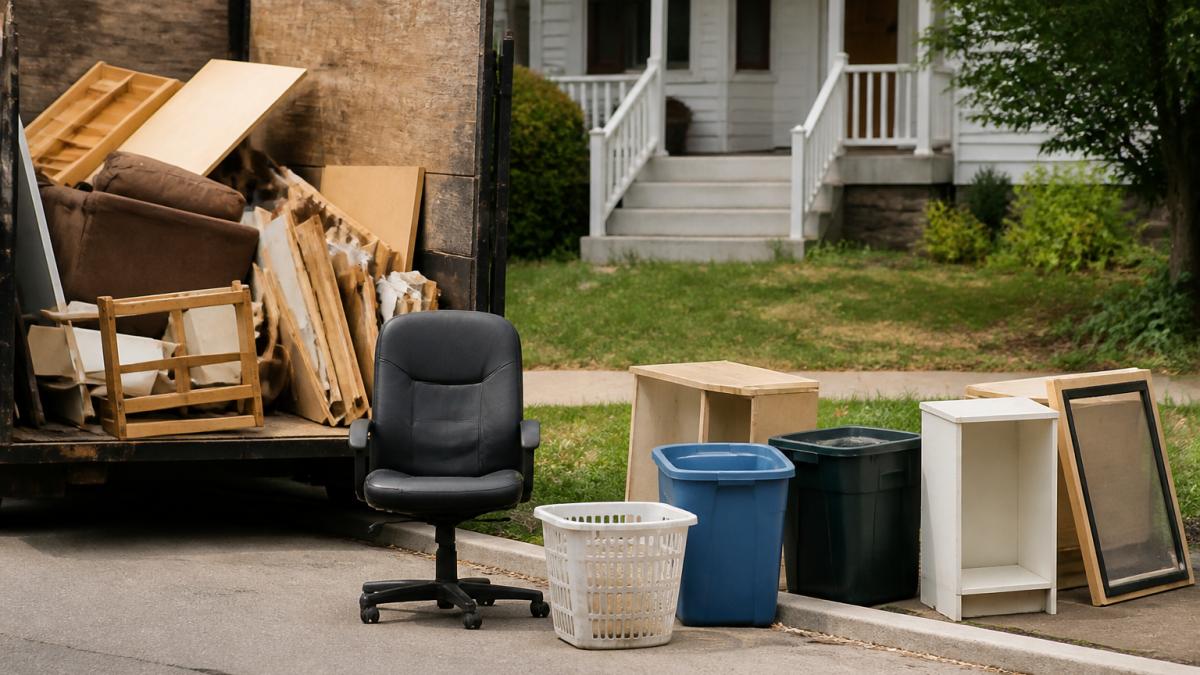
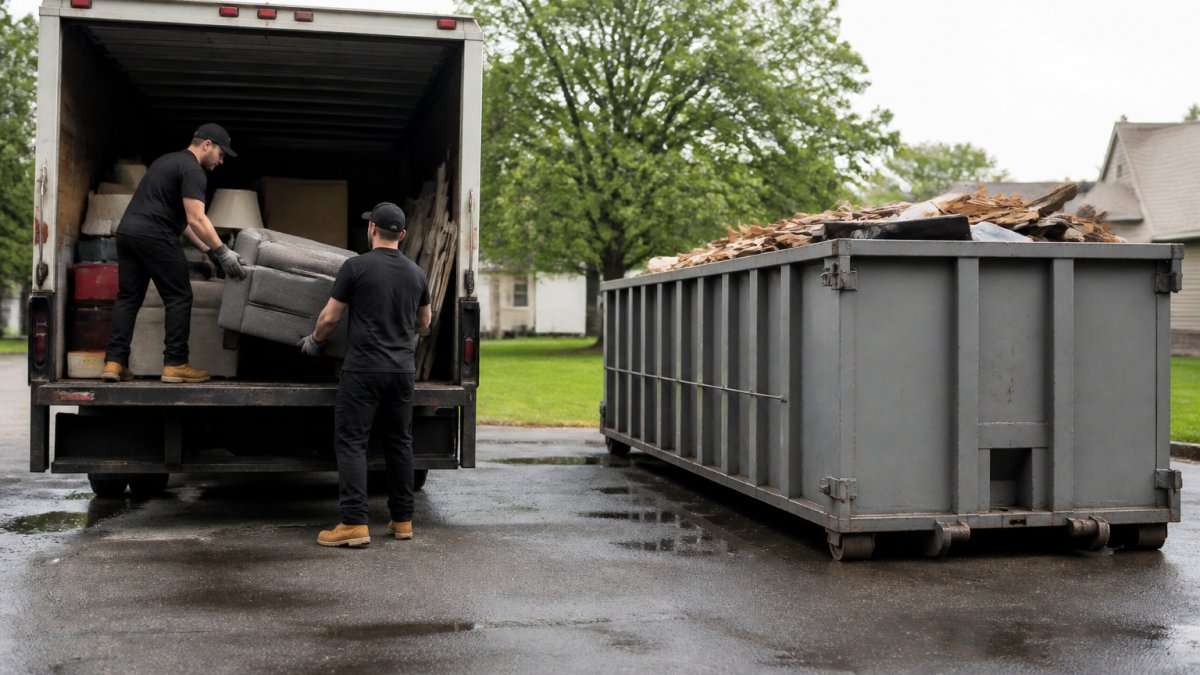
 comparison
Junk Removal vs Dumpster Rental: Which to Choose in 2026
Table of Contents
- Junk Removal vs Dumpster Rental: How Each Service Works
- Junk Removal vs Dumpster Rental: Quick Comparison Table
- What Junk Removal Cost Looks Like Compared to Dumpster Rental Pricing
- Dumpster Rental Size Guide: Matching Container Capacity to Your Project
- What Junk Removal Companies Take (and What Dumpsters Cannot Accept)
- Same-Day Junk Removal, Scheduling, and Project Pacing
- Permits, Placement, and Property Access: What Dumpster Rental Requires
- Environmental Impact: Landfill Fees, Recycling, and Donation Practices
- Frequently Asked Questions
Last Updated: October 12, 2026
Junk Removal vs Dumpster Rental: How Each Service Works
Choosing between junk removal vs dumpster rental comes down to one question: who does the heavy lifting? Junk removal is full-service, a crew hauls everything away.
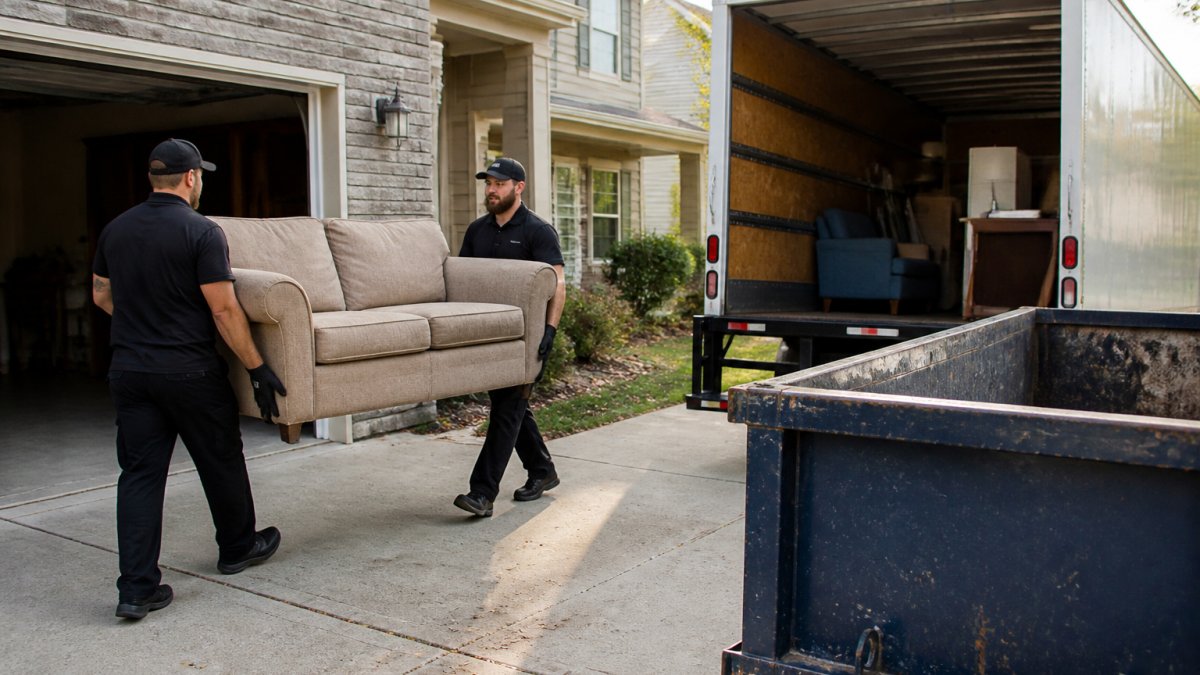
The short version: heavy items, a tight deadline, or anything you cannot safely lift favors full-service removal. Gutting a kitchen over several weekends with a container parked in the driveway favors a roll-off dumpster.
Full-Service Junk Removal: What the Crew Handles
A full-service junk removal team does everything: lifting, loading, hauling, and disposal. You point at what goes, and the crew carries it out.
This model shines for furniture removal, appliance removal, and estate or hoarder house cleanouts, where items are heavy, awkward, or stacked tight.
The tradeoff is control. You pay for labor and convenience, and you cannot add items to the load after the truck leaves.
Roll-Off Dumpster Rental: What You Take On Yourself
A roll-off dumpster is a large open-top container delivered for a set rental period. You load it yourself, then the company hauls it away.
Rental pricing combines delivery, pickup, a base weight allowance, and landfill fees, plus an overage charge if you exceed the weight limit.
Contractors doing renovation or demolition debris often prefer this route because they can toss material as they work.
Junk Removal vs Dumpster Rental: Quick Comparison Table
Here is the at-a-glance breakdown across the factors that decide most projects.
| Factor | Full-Service Junk Removal | Roll-Off Dumpster Rental |
|---|---|---|
| Who loads | Crew loads everything | You load it yourself |
| Pricing model | Volume-based, flat-rate quote | Rental period plus weight, fees |
| Best project size | Small to mid-size, heavy items | Multi-day, high-volume debris |
| Time required | A few hours, often same-day | Days to weeks, your pace |
| Labor and heavy lifting | Included | Your responsibility |
| Site access | Crew works around obstacles | Needs room for truck and container |
| Item restrictions | Crew sorts and disposes | You must screen prohibited items |
| Recycling and donation | Often included by the hauler | Rarely, unless you sort first |
What Junk Removal Cost Looks Like Compared to Dumpster Rental Pricing
Junk removal cost is volume-based: you pay for how much space your items take in the truck, often a flat rate quoted once the crew sees the load. Dumpster rental pricing bundles a rental period, a weight allowance, and disposal fees.
For smaller loads, junk removal minimums at most companies typically run in the low hundreds, according to LoadUp's junk removal vs dumpster rental guide. Dumpster rentals carry a much wider spread. Dumpsters.com's comparison guide reports a nationwide average dumpster rental cost of $687, with a range of $306 to $1,583 depending on size, location, and debris type.
A dumpster is often cheaper per pound, but you supply the labor. Junk removal costs more per load, but the crew supplies labor, truck, and disposal.
The Fee Stack: What Actually Shows Up on Each Bill
Headline prices hide the real total. Here is what each service charges.
Junk removal bill components:
- Minimum load charge: Most companies set a floor, often the equivalent of a quarter- to half-truck load, even if you only have a few items.
- Volume tier: Pricing steps up by how much of the truck bed your items fill (for example, 1/8, 1/4, 1/2, full load).
- Labor and disposal: Usually baked into the flat rate, not itemized separately.
Dumpster rental bill components:
- Delivery fee: Flat charge to drop the container, often $50 to $150 depending on distance.
- Base rental rate: Covers a set rental period, commonly 7 to 14 days.
- Included weight allowance: Typically 1 to 4 tons, depending on container size.
Scenario 1: Garage Cleanout (Light, Bulky Junk)
Picture a two-car garage packed with old furniture, boxes, a treadmill, and bagged clutter, roughly half a truckload, almost nothing heavy.
- Junk removal: A half-load flat rate, labor and disposal included. One visit, done in hours.
- Dumpster rental: A 10- or 15-yard container, one delivery and pickup, well under the weight allowance because the load is bulky but light. You supply the labor.
Where the math flips: If you can load it yourself over a weekend, the dumpster usually wins on price. If you cannot lift the treadmill or couch, the junk removal flat rate is the honest comparison.
Scenario 2: Kitchen Remodel (Heavy Debris)
Picture torn-out cabinets, countertops, drywall, tile, and old appliances across a two-week remodel.
- Junk removal: Multiple trips or one large haul. Heavy debris like tile and countertops pushes the volume tier up fast, and a crew visit per phase adds cost.
- Dumpster rental: A 20-yard container parked for the project. The catch is weight: construction debris is dense, and a half-full container can blow past a 2-ton allowance. Overage charges on heavy debris are the most common budget surprise.
Where the math flips: A dumpster wins on a multi-week remodel if you keep the load light. It loses with concrete, dirt, or shingles, because overage charges can double the bill.
Scenario 3: Estate or Hoarder Cleanout (Mixed, Labor-Heavy)
Picture a full house: furniture, appliances, clothing, paperwork, and years of accumulated items across multiple rooms and a basement.
- Junk removal: Multiple truckloads, but the crew handles stairs, tight hallways, and sorting. This is where full-service earns its price.
- Dumpster rental: You would need a large container plus the ability to carry everything out yourself, room by room, often up and down stairs. For most people, that labor is the deal-breaker, not the container price.
Where the math flips: Junk removal almost always wins here, not because it is cheaper per pound, but because the alternative assumes labor most homeowners cannot supply.
Why Like-for-Like Cost Comparisons Are Rare
Most cost comparisons fall apart because the two services are not priced the same way. A dumpster quote assumes you know your weight and timeline; a junk removal quote assumes the crew figures out volume on arrival.
To compare fairly, price the same job both ways: estimate debris weight, count the days you need the container, add overage risk, then get a flat-rate junk removal quote for the same pile.
Dumpster Rental Size Guide: Matching Container Capacity to Your Project
Dumpster size drives both price and whether your project fits in one haul. Capacity is measured in cubic yards, and too small means paying for a second delivery.
A dumpster rental size guide usually maps like this:
- 10-yard: Small cleanouts, a single room, or a few heavy items. Fits roughly a pickup-truck load of debris.
- 15-yard: Mid-size garage or basement cleanouts, small renovation waste.
- 20-yard: Large cleanouts, flooring removal, or a moderate kitchen remodel.
Weight limits matter as much as volume. Heavy materials like concrete, dirt, and roofing shingles hit the weight cap long before the container looks full.
What Junk Removal Companies Take (and What Dumpsters Cannot Accept)
Junk removal companies take most household junk, furniture, appliances, yard waste, and construction debris. What they cannot take is the same list dumpsters cannot accept, because both end up at the same facilities.
Prohibited items typically include:
- Paint and solvents: Wet paint and chemicals need special handling.
- Batteries: Car and lithium batteries are fire risks and require separate recycling.
- Tires: Most landfills restrict tires or charge extra.
Prohibited Items and Special Waste: Paint, Batteries, Tires, and More
Special waste is the part most people miss. A dumpster rental agreement lists prohibited items, and dropping them anyway can trigger fines or a rejected load.
The good news: a full-service crew sorts as it loads.
For truly hazardous material, check your local household hazardous waste program. EPA guidance on household hazardous waste explains how to identify and dispose of these items safely.
The Special-Waste Checklist: What to Pull Out Before You Load
Before anything goes in a dumpster or on a truck, run this list. Acceptance rules vary by provider and municipality, so confirm with the hauler before pickup.
- Wet paint and solvents: Latex paint can sometimes be dried out with an absorbent and then disposed of as solid waste, but oil-based paint, thinner, and solvent are hazardous waste. Never pour them down a drain.
- Batteries: Car batteries, lithium-ion packs, and rechargeable batteries are fire risks in a truck or landfill. Retailers that sell batteries often accept them back for recycling.
- Tires: Most landfills restrict whole tires or charge a per-tire fee. Tire retailers frequently accept old tires for a small fee.
How Junk Removal and Dumpster Rental Differ on Disposal
Both services send waste to the same kinds of facilities, but screening responsibility differs.
- Junk removal: The crew screens as it loads. Prohibited items are set aside and routed to the right recycler or hazardous waste facility. You pay for convenience but avoid a rejected load.
- Dumpster rental: You screen. If a prohibited item ends up in the container, the hauler may reject the load, charge a contamination fee, or require removal before pickup. That is on you.
Same-Day Junk Removal, Scheduling, and Project Pacing
Same-day junk removal is the biggest practical advantage of the full-service route.
Dumpster rental runs on a different clock: schedule delivery, work at your own pace, schedule pickup. That flexibility is real, but the container occupies your driveway the whole rental period, and extra days cost more.
Match the timeline to the job:
- One-day cleanout: Junk removal wins. Fast, single visit, done.
- Weekend project: Dumpster rental works if you can load it yourself.
- Multi-week renovation: A dumpster avoids repeated pickup fees, but watch the overage charges.
For landlords turning units between tenants, speed matters. A crew that can clear a unit in a day or two keeps your vacancy window short.
Permits, Placement, and Property Access: What Dumpster Rental Requires
Dumpster placement is where DIY projects hit roadblocks. A roll-off container needs a flat, stable surface, clear truck access, and room for the driver to drop and retrieve it.
If the container lands on a public street or sidewalk, many municipalities require a permit.
Driveway placement avoids most permit issues but risks surface damage. Use plywood under the container to protect concrete and asphalt.
Environmental Impact: Landfill Fees, Recycling, and Donation Practices
Landfill fees are baked into both options, but how much reaches the landfill depends on sorting. Every ton diverted to recycling or donation saves disposal cost and reduces environmental impact.
The most responsible junk removal companies sort loads and route reusable items to donation partners and recyclables to the right facilities. EPA information on reducing and reusing waste outlines how donation and recycling cut landfill volume.
Dumpster rental puts sorting on you. Separate metal, cardboard, and reusable furniture before loading, then donate or recycle the good stuff and send only true waste to the landfill.
Choosing between junk removal vs dumpster rental gets complicated fast when you are staring at a packed garage, an inherited property, or a rental unit that needs to turn over this week. Rubbish Outlaw Junk Removal handles the heavy lifting for you, from estate and hoarder house cleanouts to demolition and debris removal, with fast service and affordable pricing across Akron and Canton.
Frequently Asked Questions
Is junk removal cheaper than renting a dumpster?
Neither option is always cheaper. Junk removal pricing usually bundles labor, loading, transportation, and disposal into one charge. Dumpster rental pricing typically covers the container, delivery, pickup, and a set weight allowance, with any overage charges. For heavy debris like concrete or roofing shingles, a dumpster is often the better fit. For a single-room cleanout, junk removal usually wins.
What is the difference between junk removal and dumpster rental?
Junk removal is a full-service option: a crew arrives, loads your items, hauls them away, and handles disposal, so you do no heavy lifting. Dumpster rental gives you a roll-off container dropped at your property for a set rental period, and you fill it yourself. Junk removal is priced by volume or flat rate per load, while dumpster rental is priced by container size, rental days, weight limit, and any overage charge. The right pick depends on how much labor you want to do and how long your project runs.
How much junk can a junk removal service take?
Most junk removal companies price by how much space your items fill in the truck, from a single item up to a full truckload. If you have a very large amount of junk, expect multiple trips or a larger dumpster. For whole-home cleanouts, hoarder situations, or construction debris in Akron and Canton, ask the company to do an on-site estimate so the load size is confirmed before work starts.
Can I put renovation debris in a rental dumpster?
Yes, with limits. Standard roll-off dumpsters accept most renovation waste, including drywall, lumber, flooring, and old cabinets. Heavy materials like concrete, brick, dirt, and roofing shingles usually require a separate heavy-debris container because they exceed the weight limit and trigger overage charges. Prohibited items typically include paint, solvents, batteries, tires, and appliances with refrigerant. Ask the rental company for its prohibited-items list before you book, and confirm the weight allowance in writing.
Do I need a permit to place a dumpster in my driveway?
In most cases, a dumpster on a private driveway does not need a permit, but a container placed on a public street or sidewalk usually does. Permit rules vary by city and township, and some require reflective markings or a specific placement distance from intersections. Check with your local public works or permits office before delivery. Junk removal avoids this issue entirely because there is no container to place; the crew loads directly from your garage, basement, or yard.