 how-to
Safe Disposal of Old Paint: A 2026 How-To Guide
Table of Contents
- What You'll Need Before You Start
- How to Identify Your Paint Type
- Latex Paint Disposal: Step-by-Step
- Oil-Based Paint Disposal: What's Different
- How to Dry Out Paint for Trash
- Where to Take Old Paint: Drop-Off Sites and Collection Events
- Common Mistakes to Avoid with Paint Disposal
- When to Call a Junk Removal Service
- Frequently Asked Questions
Last Updated: September 13, 2026
What You'll Need Before You Start
Safe disposal of old paint starts with preparation, not a trip to the curb. Before you touch a single can, gather the basics: heavy-duty trash bags, a paint stir stick, an old screwdriver for prying lids, and a drop cloth or newspaper to protect your garage floor. If you plan to dry out latex paint, pick up an absorbent material like kitty litter, sawdust, or a commercial paint hardener.
We understand that paint cans are a common item found during garage and basement cleanouts. Many homeowners are unsure about the correct disposal methods, which can lead to confusion about what can be legally thrown away.
Here's what you'll need before you start:
- Heavy-duty trash bags (contractor grade)
- Paint stir stick or flathead screwdriver
- Kitty litter, sawdust, or paint hardener
- Rubber gloves
- Drop cloth or newspaper
- A cardboard box for transporting cans
How to Identify Your Paint Type
Identifying your paint type is the single most important step in safe disposal of old paint. The disposal method changes completely depending on whether you're holding latex (water-based) or oil-based (alkyd) paint.
Check the label first. Look for the words "latex," "acrylic," "water-based," or "clean up with soap and water." Those indicate latex paint. If the label says "alkyd," "oil-based," "solvent-based," or "clean up with mineral spirits," you have oil-based paint.
Latex vs. Oil-Based: The Quick Test
If the label is missing or unreadable, the quick test is simple. Dip a cotton ball in rubbing alcohol and rub it on a dried paint sample. Latex paint softens and comes off. Oil-based paint stays hard and doesn't budge.
You can also check the lid. Metal cans with rust rings usually mean oil-based paint that's been sitting for years. Plastic cans almost always hold latex.
Latex Paint Disposal: Step-by-Step
Latex paint disposal follows a simple rule: dry it out, then trash it. Most municipal waste programs accept dried latex paint in regular household trash because it's no longer a liquid hazard once solidified (the EPA).
Here's the step-by-step:
- Open the can in a well-ventilated area.
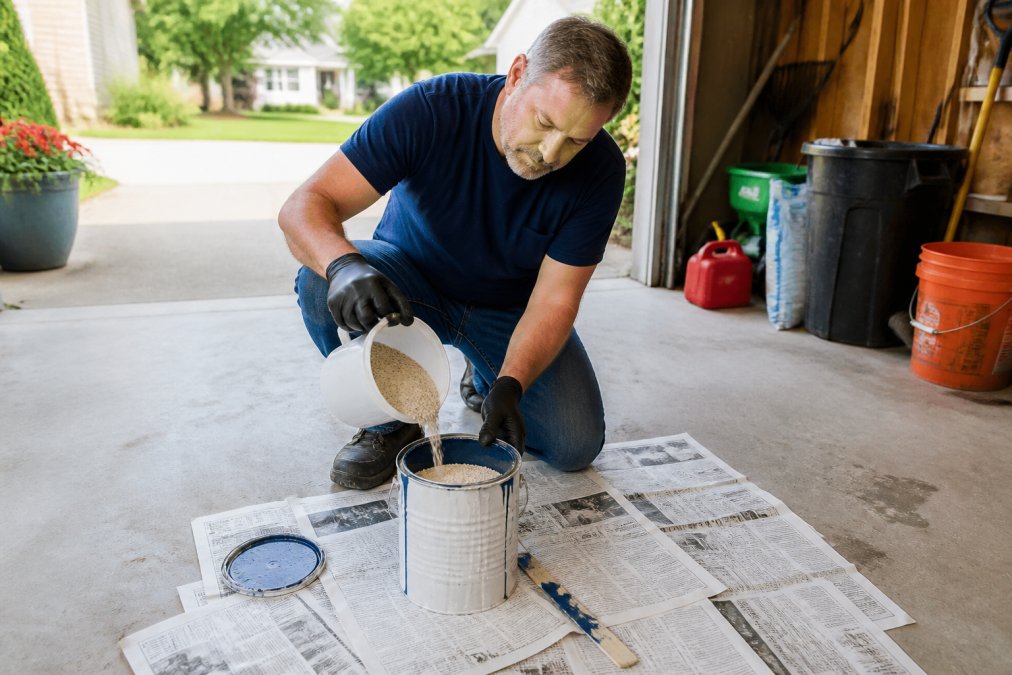
- Stir in kitty litter, sawdust, or paint hardener until the paint thickens.
- Leave the can open for 24 to 48 hours until fully dry.
- Leave the lid off so your hauler can see it's solidified.
- Place the dried can in a heavy-duty trash bag and set it out with regular trash.
If you have a full can, you can also pour thin layers onto newspaper and let them dry, then bag the dried sheets. Never pour liquid latex paint down a drain or storm sewer. That's a direct route to water contamination.
Oil-Based Paint Disposal: What's Different
Oil-based paint disposal cannot go in your regular trash, even when dried. Oil-based and solvent-based paints are classified as household hazardous waste, and most states require them to be dropped off at a designated facility or collection event.
The safest approach is to keep the can sealed, label it clearly, and store it upright until you can get it to a hazardous waste drop-off. Never mix oil-based paint with latex or pour it into a single container. Mixing can make the entire batch unrecyclable.
If you have paint thinners or solvents, treat those the same way. They belong in the same hazardous waste stream, not in your kitchen sink.
How to Dry Out Paint for Trash
How to dry out paint for trash comes down to surface area and time. The more air you expose to the paint, the faster it hardens. This works for standard latex, but certain other coatings require different disposal methods to avoid issues like rejected loads or fines.
Drying Standard Latex Paint
For small amounts, pour the paint into a cardboard box lined with plastic, spread it thin, and let it dry. For a full can, stir in an absorbent and leave it open. A commercial paint hardener works fastest, usually solidifying a quart within a few hours. Kitty litter and sawdust take longer but cost less.
Once the paint is rock-solid, it can go in the trash in most areas. Check your local rules first, because landfill restrictions vary.
Coatings That Don't Follow the Dry-and-Trash Rule
Aerosol spray paint. Empty aerosol cans are generally accepted in curbside recycling or trash once fully depressurized, but cans with product still inside are household hazardous waste. Don't puncture or crush them to speed things up, that's a fire and injury risk. Take partially full aerosols to an HHW drop-off.
Lead-based paint. Homes built before 1978 may still have lead-based paint on walls, trim, or old cans in the basement. Lead-based paint is not a dry-and-trash item. Disturbing it, sanding, scraping, or drying it out, can release lead dust. Treat any suspected lead paint as hazardous waste and route it to an HHW facility. If you're renovating painted surfaces, federal rules require lead-safe work practices for pre-1978 housing, so this is a job to research before you start, not after.
Industrial primers and specialty coatings. Two-part epoxies, marine paints, automotive primers, and rust-inhibiting primers often contain solvents or isocyanates that make them hazardous waste regardless of whether they're dry. Don't assume a dried primer is safe for the trash just because it's hard. Check the label for hazard warnings and route anything with a solvent or isocyanate warning to HHW.
Paint thinners, mineral spirits, and brush cleaner. These are liquids and belong in the same hazardous waste stream as oil-based paint. Never evaporate them in an open container indoors, and never pour them down a drain.
A Quick Decision Rule
If the label says "latex," "acrylic," or "water-based," and the can is standard interior or exterior house paint, dry it and trash it. If the label mentions a solvent, an isocyanate, lead, or the word "aerosol," stop and route it to HHW. When in doubt, treat it as hazardous, a drop-off facility will sort it correctly, and you avoid the risk of a rejected load or a fine.
Where to Take Old Paint: Drop-Off Sites and Collection Events
Drop-off sites and collection events are the correct destination for oil-based paint, aerosol cans, and any paint you don't want to dry out yourself. The trick is knowing which locator to use, because there is no single national drop-off network, it's a patchwork of county solid waste districts, municipal programs, and retailer-run take-back events.
The Locators That Actually Work
Start with these three, in order:
- Your county solid waste district website. Most counties publish a household hazardous waste (HHW) page with permanent facility addresses, hours, and accepted materials. Search "[your county] household hazardous waste" rather than the state name, the county runs the program, not the state.
- State environmental agency HHW page. State agencies maintain a directory of county programs and a calendar of one-day collection events. These pages are the authoritative source when a county site is outdated.
- Retailer and manufacturer take-back programs. PaintCare operates drop-off sites in states that have passed paint stewardship laws, and many hardware retailers host periodic collection events. Availability varies by state, so confirm before you load the car.
PaintCare drop-off site locator
What to Bring and How to Pack It
A rejected load is the most common wasted trip. Pack to these standards:
- Keep cans upright and sealed. A sturdy cardboard box or plastic tote prevents tipping in the trunk.
- Leave original labels on. Staff use the label to confirm the paint is accepted. If the label is gone, write the paint type on the can in marker.
- Don't mix paint types in one container. Latex, oil-based, and aerosol cans are often sorted into separate streams at the site.
- Bring proof of residency. Many programs restrict drop-off to county or city residents and check a utility bill or driver's license.
- Expect per-household limits. A common cap is a set number of cans or a set volume per visit, and some events require pre-registration.
Why 'Check Your Local Rules' Isn't a Cop-Out
Disposal rules for old paint are set at the county and municipal level, not just the state level. Two households in the same state can face different rules because one sits inside a city with a permanent HHW facility and the other relies on a twice-a-year county event. That's why a generic national answer doesn't exist, and why the locator steps above matter more than any single rule of thumb.
If you're unsure whether your paint qualifies as HHW, the safe default is to treat it as HHW and take it to a drop-off. A facility that accepts it will sort it correctly; a curbside hauler that doesn't will reject the load or, worse, fine you for illegal dumping.
Common Mistakes to Avoid with Paint Disposal
The biggest mistake is treating all paint the same. Latex and oil-based paints have completely different disposal paths, and mixing them up can mean an illegal dump or a rejected load at the transfer station.
Other mistakes we see regularly:
- Pouring liquid paint down a drain or storm sewer
- Putting liquid paint in the trash, which can leak and contaminate the truck
- Leaving the lid on a dried latex can, which makes haulers assume it's still liquid
- Storing oil-based paint near heat sources
- Ignoring aerosol cans, which are also household hazardous waste
When to Call a Junk Removal Service
Calling a junk removal service makes sense when paint is only part of the problem. If you're clearing out a garage, basement, or estate property and you're staring at a wall of half-used cans alongside furniture, tools, and debris, hauling it all yourself is a weekend you'll never get back.
A professional team can sort paint from general junk, separate hazardous materials, and route each item to the right facility. This ensures a proper cleanout.
Clearing out old paint is manageable when you know which type you're holding and where it's allowed to go. But when paint is buried under years of garage clutter, the job gets bigger than a few trash bags. Rubbish Outlaw Junk Removal handles full property cleanouts across Akron and Canton, including demolition debris, estate cleanouts, and hoarder situations. We sort, haul, and dispose responsibly. Get started with Rubbish Outlaw Junk Removal and reclaim your space with a free estimate.
Frequently Asked Questions
What can I put in paint to dry it out for trash?
For latex paint, stir in kitty litter, sawdust, or a commercial paint hardener until the paint thickens. Let it sit in a well-ventilated area until completely solid. Once hard, leave the lid off and place the can in your regular trash. Oil-based paint requires a different process because it is household hazardous waste and should never go in the trash.
Can I pour old paint down the drain?
No. Pouring paint down a drain can contaminate water sources and is illegal in many areas. Even latex paint contains chemicals that can harm aquatic life. Instead, solidify latex paint with kitty litter or a hardener and throw it in the trash. Take oil-based paint to a household hazardous waste collection event or drop-off site.
How do I know if my paint is latex or oil-based?
Check the label for words like 'alkyd' or 'solvent-based' (oil-based) or 'water-based' (latex). If the label is missing, apply a small amount to a hidden surface. Oil-based paint feels slick and cleans up with paint thinner, while latex paint cleans up with soap and water. You can also test with denatured alcohol: latex paint softens and comes off, while oil-based paint stays hard and does not budge.
Can I recycle old paint instead of throwing it away?
Yes, some communities have paint recycling programs or paint stewardship programs that accept usable latex paint. Check with your local waste management authority or visit a paint drop-off site locator online. If the paint is still in good condition, consider donating it to a community group, theater, or Habitat for Humanity ReStore. Never mix different types of paint together for recycling.