 ultimate-guide
Junk Removal Cost Per Truckload: 2026 Pricing Guide
Table of Contents
- What Is Junk Removal Cost Per Truckload?
- Factors Affecting Junk Removal Costs
- Full Service Junk Removal vs. Dumpster Rental
- Scenario 1: Small Garage Cleanout (Quarter Load)
- Scenario 2: Basement Clearance (Half Load)
- Scenario 3: Kitchen Renovation (3-Day Project)
- Scenario 4: Estate Property Clearance (Full Load + Sorting)
- How to Get an Accurate Junk Removal Quote
- Hidden Fees Checklist: What to Watch For
- Donation and Recycling: Potential Tax Deduction Benefits
- Frequently Asked Questions
Last Updated: September 27, 2026
What Is Junk Removal Cost Per Truckload?
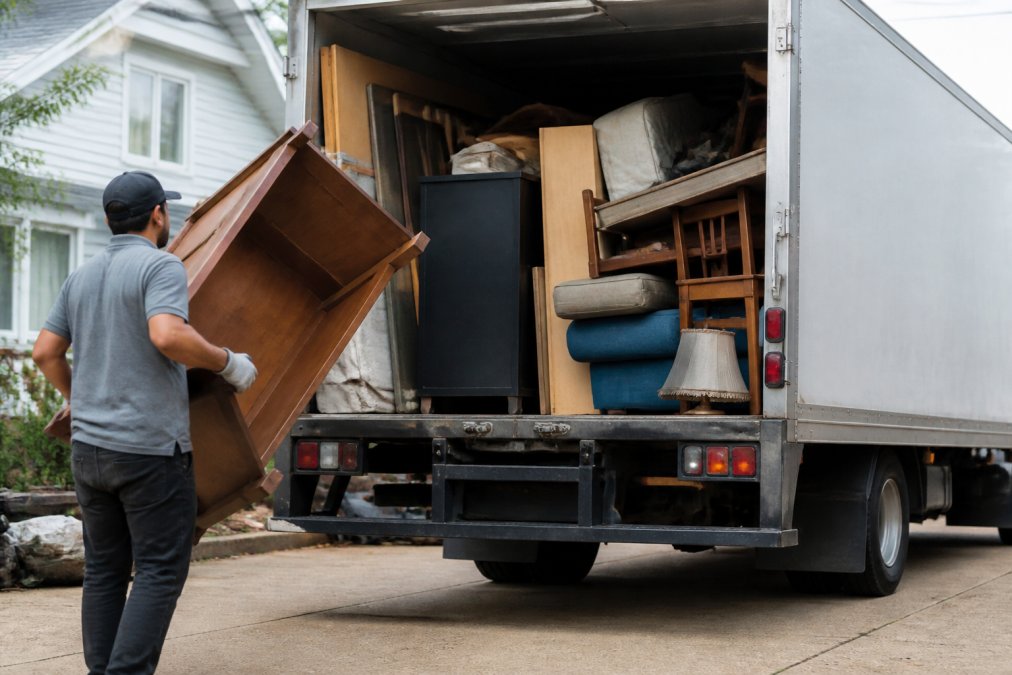
Junk removal cost per truckload is the price you pay when a junk removal service hauls away a full or partial truck capacity of unwanted items from your property. Unlike dumpster rentals that charge by the day, junk removal pricing is typically based on how much space your items occupy in the truck or how much the load weighs.
Pricing models vary: some companies charge a flat rate for a half or full truckload, while others use volume-based pricing based on truck capacity. At Rubbish Outlaw Junk Removal, we help homeowners and property managers in Akron and Canton understand exactly what they're paying for.
Unlike dumpster rentals, you're paying for labor, hauling, and disposal in one transaction. The crew arrives, loads your items, and hauls everything to the appropriate facility. This all-inclusive approach suits one-time cleanups, garage cleanouts, basement debris removal, or estate property clearance.
Factors Affecting Junk Removal Costs
Several variables determine junk removal cost per truckload: volume, labor intensity, item type, and disposal destination.
Volume-Based Pricing Explained
Volume-based pricing charges based on truck space occupied. A half truckload costs less than a full truckload, and a quarter load costs even less. This model works well for straightforward jobs where items are accessible and easy to load.
The challenge is estimating volume accurately. Companies typically offer free on-site assessments where the crew visualizes the load and quotes based on cubic feet or truck capacity percentage, preventing billing surprises.

Weight-Based vs. Volume-Based Surcharges
Some junk removal companies apply surcharges when items are exceptionally heavy or dense, even if they don't take up much space.
Concrete chunks, for example, occupy minimal volume but weigh significantly more than cardboard boxes. Weight-based surcharges account for landfill disposal costs, which often charge by tonnage.
Conversely, bulky items like couches or mattresses take up enormous space but weigh less than expected, so volume-based pricing charges fairly while weight-only models might undercharge.
The best companies disclose both: "We charge $X for a half truckload by volume, plus $Y per ton if the load exceeds weight limits." This transparency protects both you and the service provider.
Labor Intensity and Service Type
Labor costs drive significant pricing. A curbside pickup takes 30 minutes; a hoarder house cleanout requiring sorting and hazardous waste separation takes days.
Full-service junk removal includes labor and disposal. Labor-only services mean you've sorted items; the crew just hauls them. Labor-only jobs cost less due to lower time investment.
Specialized services carry premium pricing. Boat removal requires equipment and expertise; estate cleanouts cost more than standard garage cleanouts.
Full Service Junk Removal vs. Dumpster Rental
Understanding the difference between full-service junk removal and dumpster rental helps you choose the right solution for your junk removal cost per truckload situation. The choice depends on your project scope, timeline, physical ability, and whether you want to handle sorting yourself.
Full-Service Junk Removal: What You Get
Full-service junk removal means the crew assesses, loads, hauls, and disposes of everything. You point; they work. Standard jobs typically take 1-3 hours.
This model suits one-time projects, elderly homeowners or those unable to load heavy items, people without time to sort debris, and situations requiring removal from inside the home.
Key advantage: crews often separate recyclables and donations, reducing net cost through tax deductions and keeping usable items out of landfills.
Dumpster Rental: What You Get
Dumpster rental means renting a large container (typically 10-40 cubic yards) for a set period (usually 3-7 days). You fill it at your own pace; the company picks it up when the rental ends.
This model suits construction projects, situations where you have time to sort and load items, continuous debris generation, and homeowners who prefer controlling what goes where and when.
Key advantage: no time pressure and schedule flexibility.
Cost Comparison: Real-World Scenarios
Scenario 1: Small Garage Cleanout (Quarter Load)
Scenario 2: Basement Clearance (Half Load)
Scenario 3: Kitchen Renovation (3-Day Project)
Scenario 4: Estate Property Clearance (Full Load + Sorting)
- Winner: Full-service junk removal if you want items sorted and donated. Dumpster rental if you're willing to do the sorting and have time.
Hidden Variables That Shift the Decision
Full-service junk removal companies often separate recyclables and donate usable items, allowing tax deductions if you itemize. Dumpster rentals don't offer this service.
Dumpster rentals include delivery and pickup, but some charge extra for long, unpaved driveways or special equipment access. Full-service junk removal has no such variables.
Overfilling a dumpster incurs overage fees. Full-service junk removal charges by load size upfront, with no surprises.
Dumpster rentals lock you into a rental period with extension fees if needed. Full-service junk removal is one transaction with no ongoing fees.
How to Get an Accurate Junk Removal Quote
Getting an accurate estimate prevents billing disputes and helps you budget correctly for junk removal cost per truckload services.
Step 1: Document Your Items
Walk through your property and photograph or list everything you want removed. Be specific: "five boxes of books," "dining room table," "old refrigerator," "pile of lumber." Vague descriptions like "stuff in the garage" lead to inaccurate quotes.
Step 2: Disclose Special Circumstances
Mention hazardous waste (paint, batteries, chemicals), hoarder situations, biohazards, or items requiring special handling. These details dramatically affect pricing and crew requirements. A company that doesn't ask about these conditions may underquote and then refuse the job.
Step 3: Request an On-Site Assessment
Phone quotes are rough estimates. An on-site assessment by the actual crew provides accuracy. During the walkthrough, the team evaluates access (narrow doorways, stairs, outdoor terrain), item fragility, and whether specialized equipment is needed.
Step 4: Ask About Inclusions
Confirm what's included in the quote: labor, hauling, disposal fees, recycling, donations, and cleanup of the area after removal. Some companies charge extra for sweeping and debris cleanup; others include it.
Step 5: Compare Multiple Estimates
Get quotes from at least two companies.
Hidden Fees Checklist: What to Watch For
Before committing to a junk removal service, review this checklist of common hidden fees and surcharges.
- Disposal fees: Landfill charges per ton; confirm whether this is included in the quote or added later
- Environmental fees: Some jurisdictions charge for proper waste handling; ask if this is passed through to you
- Fuel surcharge: Rising fuel costs sometimes trigger additional charges; confirm whether fuel is included or billed separately
- Hazmat surcharge: Hazardous waste (paint, batteries, electronics) often costs extra to dispose of legally
- Access fees: If the crew needs to rent equipment, pay for parking, or work in difficult terrain, these costs may be added
- Minimum load charge: Some companies have a minimum fee even for small loads (e.g., "$150 minimum regardless of volume")
- After-hours or weekend fees: Emergency or weekend service may cost more
- Donation handling fee: Some companies charge to haul away items you want donated rather than discarded
- Cleanup surcharge: Sweeping, pressure washing, or debris cleanup after removal may cost extra
Donation and Recycling: Potential Tax Deduction Benefits
If your junk removal company donates usable items to qualified nonprofits, you may deduct their fair market value on your taxes. To claim deductions, you need an itemized list, charity receipt, and condition records. Ask upfront whether the service provides donation documentation. Recycled items typically don't generate deductions but reduce landfill waste.
| Pricing Model | Best For | Key Advantage | Potential Drawback |
|---|---|---|---|
| Volume-based | Standard household junk | Transparent, predictable | Doesn't account for weight |
| Weight-based | Heavy, dense items | Fair for landfill costs | Hard to estimate upfront |
| Flat rate (half/full load) | Known quantity jobs | Simple, no surprises | May overpay for small loads |
| Labor-only | Pre-sorted, prepared items | Lower cost | Requires your effort upfront |
| Hourly rate | Small or uncertain jobs | Pay only for time used | Total cost unpredictable |
Frequently Asked Questions
What is the minimum charge for junk removal?
Most junk removal services charge a minimum load charge to cover truck deployment, fuel, and crew time. The exact minimum depends on your location and the hauling service's operating costs. Contact your local provider for their current minimum. This ensures the service is economically viable even for smaller jobs, while full truckloads typically offer better per-unit value.
Is it cheaper to rent a dumpster or hire a full service junk removal team?
Full service junk removal works best for one-time cleanouts where you want items hauled away without lifting. Dumpster rental suits longer projects where you control timing and load your own debris. Full service junk removal typically costs more per item but saves labor; dumpster rental may cost less overall if you have time to load it yourself. Compare quotes for your specific job to decide.
What items are typically excluded from standard truckload pricing?
Hazardous waste like paint, batteries, refrigerants, and asbestos often carry surcharges or require specialized disposal. Some services exclude appliances with refrigerants or large items like hot tubs without additional fees. Always disclose hazardous materials upfront when requesting an estimate to avoid surprises and ensure safe, legal disposal.
How much does a full truckload of junk typically cost?
Junk removal cost per truckload depends on volume, weight, item type, labor required, and local disposal fees. A full truckload pricing varies significantly by region and service provider. Request a free estimate from your local junk removal company for an accurate quote based on your specific debris and location.