 how-to
How to Sort Sentimental Items During Cleanouts
Table of Contents
- Why Sentimental Items Are Difficult to Let Go Of
- Prepare Your Space and Gather Supplies Before You Start
- Sort Sentimental Items One Category at a Time
- What to Keep, Donate, or Toss During a Home Cleanout
- How to Preserve Family Photos and Keepsakes
- How to Divide Sentimental Items Among Family
- Estate Cleanout Checklist and Disposal Routes
- Manage Guilt and Overwhelm When Letting Go
- Frequently Asked Questions
Last Updated: October 11, 2026
Why Sentimental Items Are Difficult to Let Go Of
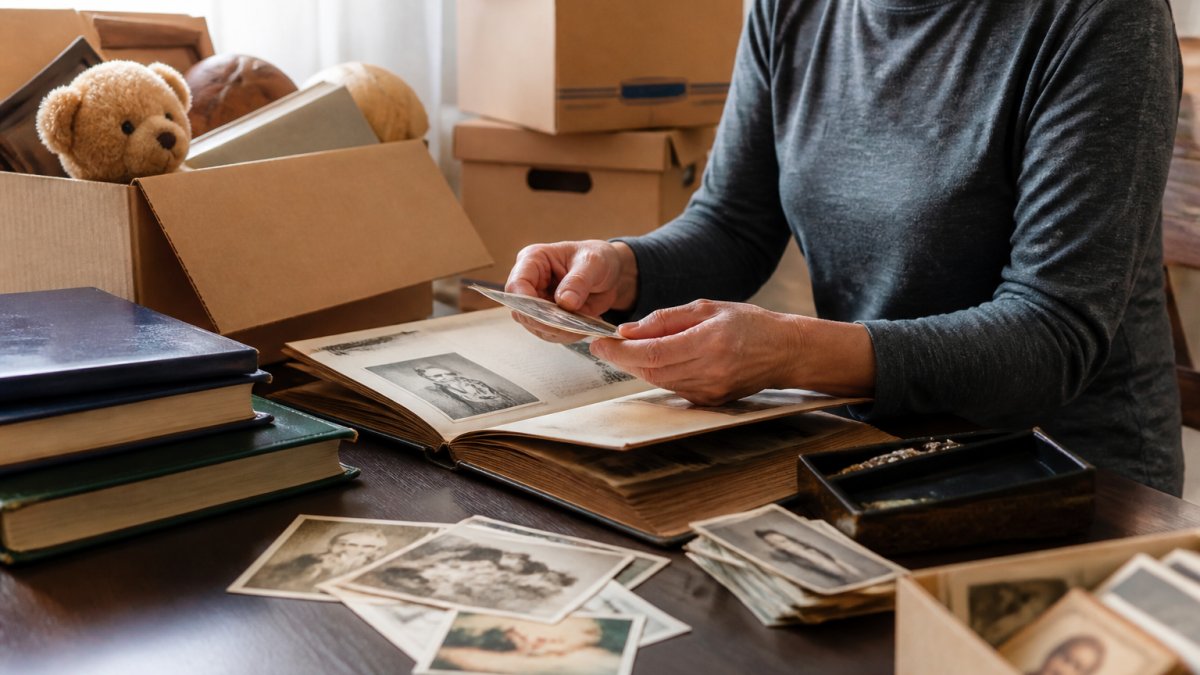
Sorting sentimental items during cleanouts is one of the hardest parts of any property cleanout. Unlike old furniture or broken appliances, sentimental belongings carry memories and emotions, a faded photograph, a parent's wedding ring, or a child's artwork isn't just an object, it's a connection to someone or a moment that mattered.
The difficulty isn't laziness or indecision, it's genuine emotional weight. When you hold something tied to a cherished memory or loved one, letting it go can feel like losing the memory itself.
Sentimental clutter builds up not because people don't want to let go, but because they lack a clear process for deciding what stays and what goes. Without a system, the emotional weight of each item paralyzes the decision.
The good news: you don't have to choose between honoring memories and reclaiming your space. A thoughtful approach to sorting sentimental items lets you preserve what truly matters while letting go of the rest without guilt.
Prepare Your Space and Gather Supplies Before You Start
Before you touch a single keepsake, set up your environment for success. You need room to spread out, organize without rushing, and return to the work over multiple sessions without losing momentum.
Set up your sorting station
Clear a large, dedicated space, a bedroom, garage, or living room, where you can leave items sorted for several days without disrupting daily life. You'll need room for at least four distinct piles: keep, donate, discard, and uncertain. If space is limited, use a closet, spare room, or large table with labeled bins. The key is containment: see all items in a category at once without them spilling into walkways or living areas.
Gather essential supplies
- Large boxes or bins (at least 4-6) for each category
- Labels, markers, and a label maker
- Bags for donations and heavy-duty trash bags
- A camera or smartphone for photographing keepsakes before letting them go
- Notebook or digital document to record decisions and family agreements
- Hand sanitizer, gloves, and a dust mask
- Sorting labels: "Keep," "Donate," "Discard," "Uncertain," "Family Decision Needed"
- Packing tape, packing paper, and boxes for items you're keeping
Create a realistic timeline and staging plan
Breaking the work into 2-3 hour sessions over several weeks is more effective than marathon sorting. Week 1: Prepare your space and sort one easy category (books, decorative items). Weeks 2-3: Sort medium-emotion categories (clothing, school memorabilia). Weeks 4-5: Sort high-emotion categories (inherited items, photos, letters). Week 6: Final review, document family agreements, and arrange pickups. For a full-house cleanout, add 1-2 weeks per major room. For a single bedroom, compress to 3-4 weeks. For a multi-room inherited property, plan 6-12 weeks depending on volume and family involvement.
Set a storage space limit
Before you start, decide how much space you'll dedicate to keepsakes, one memory box, one shelf, or one closet. Setting a physical limit forces intentional decisions and prevents sentimental clutter from rebuilding. You'll make better decisions when you have a clear endpoint in sight.
Sort Sentimental Items One Category at a Time
The biggest mistake people make is trying to sort everything at once. Instead, break the work into small, manageable categories.
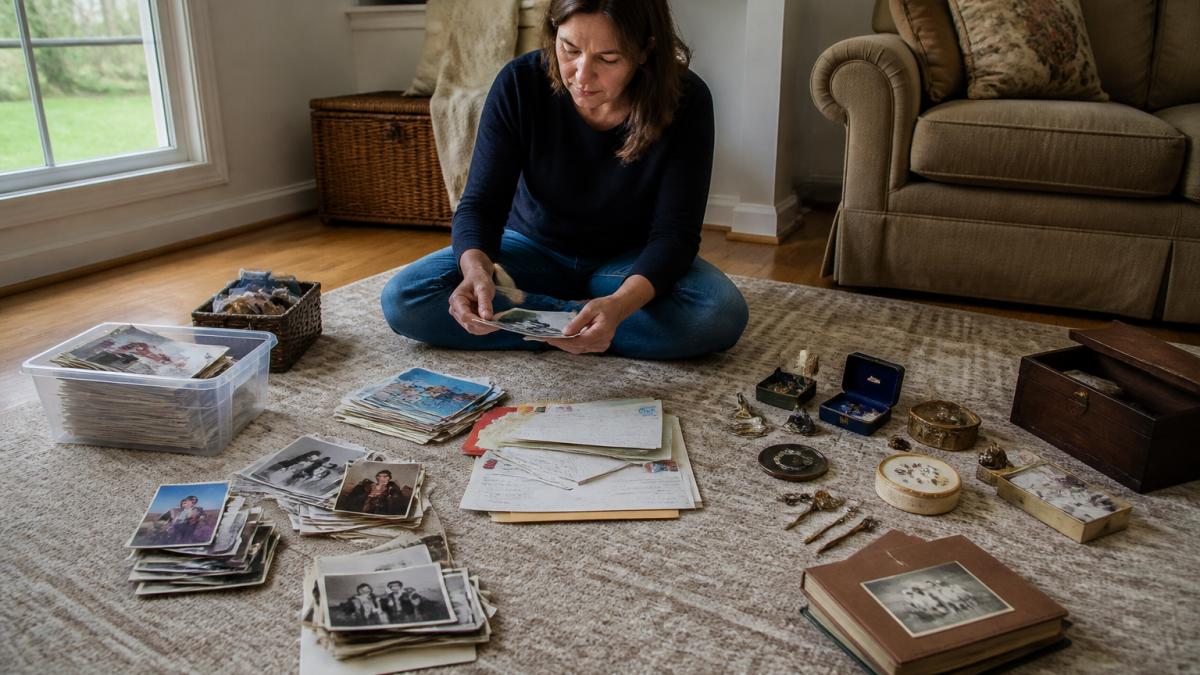
Start with the easiest category first
Begin with items that carry less emotional weight, old books, school papers, or decorative items. Success with lower-stakes items builds momentum for harder decisions later. Avoid starting with the most emotionally charged categories like a parent's personal effects or a deceased loved one's belongings.
Gather similar items together
Once you've chosen a category, pull every item in that category into one space. Seeing everything together changes your perspective, you realize you have 47 birthday cards from the same person or 200 nearly identical family photos from one vacation. Grouping similar items makes it easier to keep the best examples and let go of duplicates.
What to Keep, Donate, or Toss During a Home Cleanout
Now comes the hard part: deciding what stays and what goes. Use these guidelines to make intentional choices about sentimental items.
Keep: Items that spark genuine joy or serve a real purpose, photographs that capture meaningful moments, letters from people you love, objects representing important milestones, and items you actually display or use.
Donate: Items in good condition that don't fit your life anymore, decorative items you don't love, books you won't reread, or clothing with sentimental value that doesn't fit.
Toss: Damaged items that can't be restored, broken jewelry, water-damaged photos, torn documents, or items contaminated with mold. Toss duplicates; you don't need five copies of the same photo.
The one-in, one-out rule for ongoing control
After your cleanout, prevent sentimental clutter from rebuilding with the one-in, one-out rule: for every new sentimental item you bring in, let one go. This keeps your collection intentional and manageable.
How to Preserve Family Photos and Keepsakes
Preservation doesn't mean keeping every item. It means protecting the memories that matter most.
Photograph keepsakes before letting them go
Before you donate or discard a sentimental item, photograph it. This preserves the memory without keeping the physical object. Create a digital album organized by category or person and store copies in cloud storage. The photograph captures what matters, the memory, while freeing you from storing the physical item.
Create a curated memory box
Instead of keeping dozens of items scattered throughout your home, create one intentional memory box with the most meaningful keepsakes, irreplaceable photographs, meaningful letters, and small inherited items. Store it in a labeled box in a safe, accessible place. This approach honors your memories without creating clutter.
How to Divide Sentimental Items Among Family
Estate cleanouts and inherited homes often involve multiple family members with competing claims on sentimental items. Clear communication prevents conflict and resentment.
Handle disputed or shared items fairly
If multiple family members want the same item: First claim goes to whoever has the strongest connection. Rotation: Take turns choosing items fairly. Photograph and divide: For items that can't be split, photograph and give copies to everyone; the original goes to whoever has the strongest claim. Monetary value: Get it appraised; whoever wants it can buy out others' shares or you can sell and split proceeds. Document decisions in writing to prevent future disputes.
Estate Cleanout Checklist and Disposal Routes
A systematic approach to routing items prevents them from getting lost, mishandled, or sent to the wrong destination. Different categories of sentimental items require different handling and disposal paths.
Identify and separate hazardous and valuable items first
Before removing anything, flag items needing special handling:
Hazardous materials: Old paint, batteries, medications, asbestos-containing materials, electronics with mercury, propane tanks.
Valuable items: Jewelry, collectibles, antiques, artwork, firearms, or items with sentimental value to multiple family members.
Document findings with photos and notes. Research your local hazardous waste disposal options before the cleanout begins. Many communities offer free or low-cost hazmat collection days (the EPA). Contact your local solid waste management district for schedules and drop-off locations.
Create a destination decision tree for each item category
Match each category to its best destination:
Clothing and textiles: Goodwill, Salvation Army, thrift stores, or specialized charities (Dress for Success, animal shelters).
Books and documents: Public libraries, Little Free Libraries, used bookstores, or schools. Shred sensitive documents; do not donate.
Furniture and large items: Habitat for Humanity ReStore, local shelters, Facebook Marketplace, or donation pickup services.
Electronics and appliances: Best Buy, manufacturer take-back programs, certified e-waste recyclers, or donation if functional. Do not put in regular trash.
Metals and recyclables: Local metal recyclers, curbside recycling, or appliance recyclers.
Photographs, letters, and sentimental documents: Photograph before discarding, donate to historical societies if significant, or share with family members.
Hazardous waste: Community hazmat collection events, specialized disposal services, or pharmacy take-back programs.
Document decisions and create a removal schedule
Create a simple spreadsheet or checklist:
| Item/Category | Destination | Pickup/Delivery Date | Contact Info | Notes |
|---|---|---|---|---|
| Mom's clothing | Goodwill | Week 2 | 555-0123 | Scheduled pickup |
| Photo albums | Digital scan + keep 1 box | Ongoing | , | Scan by Week 3 |
| Old electronics | Best Buy e-waste | Week 3 | bestbuy.com/recycling | Free drop-off |
| Paint cans | County hazmat event | Week 2 | County solid waste | Next event: March 15 |
This prevents items from sitting in limbo and ensures family members know what's happening to shared or disputed items.
Arrange logistics for large-volume cleanouts
For estate cleanouts with multiple rooms or mixed items:
- Schedule pickups in advance. Goodwill and Salvation Army often require 1-2 weeks' notice for bulk pickups. Habitat ReStore may have item restrictions.
- Rent a dumpster if needed. For large volumes of discardable items, a 10-20 cubic yard dumpster may be more efficient than multiple donation trips.
- Hire a professional cleanout service if the scope is overwhelming. Services like junk removal companies handle hauling and proper disposal in a single visit, saving time and ensuring items go to appropriate destinations rather than landfills.
- Coordinate with family members. If multiple relatives are involved, confirm who's responsible for each destination and when items will be removed.
Proper routing saves time, ensures compliance with local regulations, and gives items a second life through donation or recycling rather than landfill disposal.
Manage Guilt and Overwhelm When Letting Go
The emotional part of sorting sentimental items often lasts longer than the physical work. Guilt, grief, and overwhelm are normal. Acknowledge these feelings without letting them stop you.
Remind yourself: keeping an item doesn't preserve the memory. Photographs, written notes, and digital copies preserve memories. The physical object is just a container. You can honor the memory while letting the object go.
Set small goals. Don't aim to sort your entire house in one weekend. Sort one category per week. Celebrate each completed category. Progress builds momentum and confidence.
Consider asking for support. A trusted friend or family member can provide emotional support during the process.
If you're overwhelmed by the scope, a full house, inherited property, or years of accumulated items, professional help makes sense.
Sorting sentimental items during cleanouts is emotionally demanding work. The process requires both practical systems and emotional resilience. Get a free estimate and discover how we can simplify your cleanout.
Frequently Asked Questions
How do you decide what sentimental items to keep?
Ask yourself: Does this item bring me joy or serve a meaningful purpose? Keep pieces that represent important relationships or milestones. Set a storage limit, designate a specific shelf, box, or closet for keepsakes so you curate intentionally rather than accumulate. Photograph items before discarding them if you want to preserve the memory without the physical object. This approach lets you honor what matters most while preventing sentimental clutter from overwhelming your space.
What should you do with sentimental items you don't have room to keep?
Before discarding, consider these options: Offer items to family members who may value them; donate to charities, museums, or historical societies if they have cultural or historical significance; sell valuable pieces through online marketplaces or antique dealers; photograph the item and create a digital archive; or responsibly recycle or dispose of them. For inherited items or family heirlooms, ask other family members first, what you can't keep may be treasured by a sibling or cousin. This ensures items find homes where they're genuinely valued.
How can family members sort sentimental items together without arguing?
Establish clear rules before you start: Each person gets a chance to claim items they want; items no one claims are donated or discarded; document who receives what to prevent future disputes. Take breaks when emotions run high, sorting inherited items or a deceased loved one's belongings is emotionally taxing. Consider hiring a professional mediator or junk removal service if family conflict is likely. Work through one category at a time so the project feels manageable. Acknowledge that different family members attach different meaning to the same object, and that's normal.
Should you sort sentimental items before or after the rest of a cleanout?
Sort sentimental items first or separately from the general cleanout. Emotional items require thoughtful decision-making, while the rest of the cleanout can move faster. Mixing them together risks making hasty choices you'll regret. Dedicate a specific time and calm environment to sorting keepsakes, photographs, and family heirlooms. Once you've decided what to keep, donate, or discard, the remaining debris removal and disposal becomes straightforward, and you can arrange professional junk removal for the non-sentimental items without distraction.