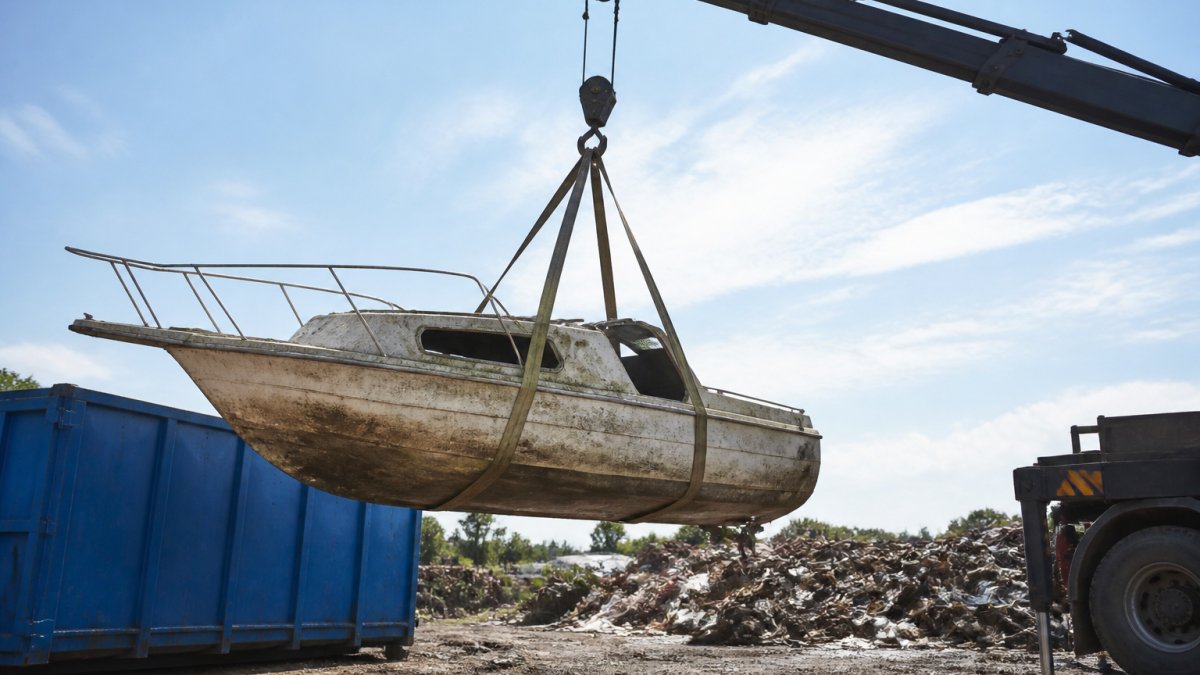
 how-to
How to Dispose of Old Boats: 7 Legal & Safe Steps
Table of Contents
- Step 1: Confirm Ownership and Prepare the Vessel for Disposal
- Step 2: Explore Donating a Boat for Tax Deduction
- Step 3: Scrap and Salvage Options for Hull Recycling and Parts
- Step 4: Understand the Cost of Boat Disposal
- Step 5: Hire Professional Junk Boat Removal Services
- Step 6: DIY Dismantling Safety and Legal Checklist
- Frequently Asked Questions
Last Updated: September 30, 2026
Step 1: Confirm Ownership and Prepare the Vessel for Disposal
Learning how to dispose of old boats starts with one question: do you actually own it? You need a clean title and the hull identification number before any yard, charity, or hauler will touch it. This guide walks through the steps that keep you legal, safe, and out of trouble.
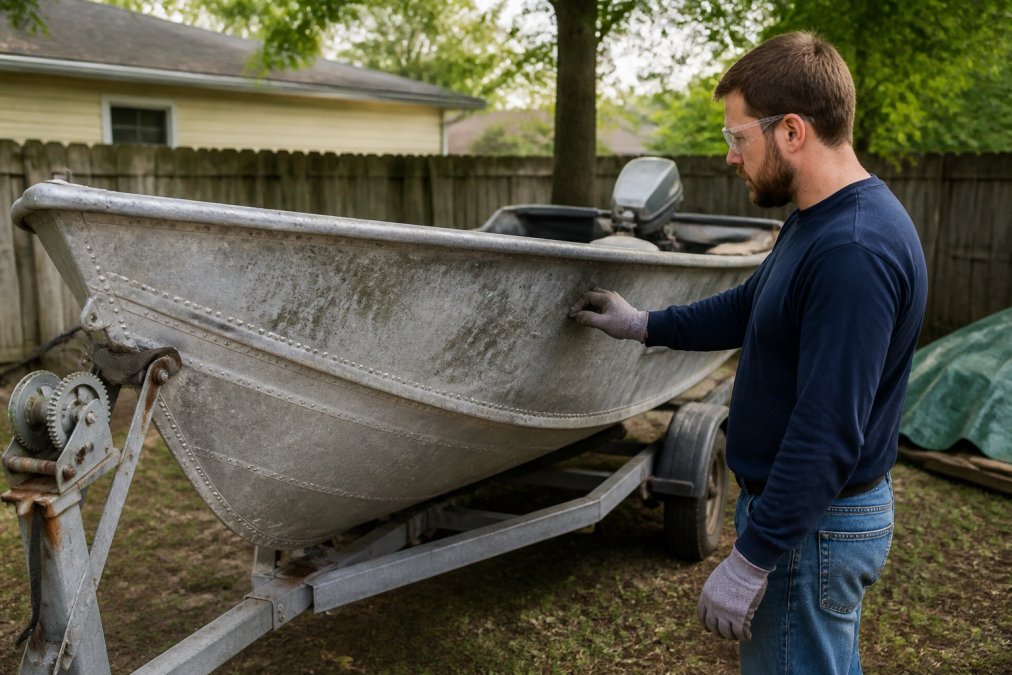
Gather Your Title and Vessel Identification Number
Paperwork comes first, always. A vessel title transfer cannot happen without proof you own the boat.
- Original certificate of title
- Current registration card
- Bill of sale, if you bought it used
- Photo of the hull identification number
Drain Fluids and Remove Hazardous Materials
Old boats hold a surprising amount of hazardous waste. Gas, oil, and antifreeze all need proper handling before the hull moves anywhere.
Step 2: Explore Donating a Boat for Tax Deduction
Donating a boat for tax deduction is the cleanest path when the vessel still floats or runs. Charities resell or auction working boats, and you get a write-off. The catch: the boat has to have real value.
Which Organizations Accept Boat Donations
Not every charity takes boats. Look for groups that run a boat donation program and can issue a receipt.
- National boating nonprofits
- Local youth sailing and sea scout programs
- Veterans and adaptive sports groups
- Religious and community organizations
How to Document Your Deduction
Get a written acknowledgment from the charity. It must list the boat, the date, and whether you received anything in return.
Keep your own records too:
- Copy of the signed title
- Photos of the boat before donation
- The charity's written receipt
- Any appraisal for higher-value vessels
Step 3: Scrap and Salvage Options for Hull Recycling and Parts
A boat that won't sell or donate still has value in pieces. Hull recycling and parts salvage turn a yard ornament into cash and scrap. The scrap metal value depends on what the boat is made of.
What Scrap Yards Accept and What They Pay
A salvage yard wants metal, not fiberglass. Call ahead and ask what they take before you tow anything over.
| Material | Scrap Yard Takes It? | Notes |
|---|---|---|
| Aluminum hull | Yes | Best scrap value |
| Steel hull | Yes | Heavy, lower per-pound rate |
| Outboard motor | Sometimes | Metal only, fluids drained |
| Fiberglass hull | Rarely | Most yards refuse it |
| Trailer | Yes | Steel frame and axle |
| Battery | Yes | Recycled separately |
Fiberglass Recycling vs. Landfill Restrictions
Fiberglass is the hard part. Most landfill restrictions treat fiberglass hulls as bulky waste, and many sites refuse them outright.
Step 4: Understand the Cost of Boat Disposal
The cost of boat disposal depends on size, material, and how much work you do yourself. There is no flat national rate. Anyone quoting you a fixed number without seeing the boat is guessing.
What Drives Disposal Fees Up or Down
Several factors move the number:
- Hull material and total weight
- Fuel, oil, and bilge water still on board
- Whether the engine and outboard come off first
- Access to the boat (driveway vs. tight backyard)
- Local tipping fees at the landfill
Doing the prep yourself, draining fluids, pulling the battery, stripping metal, cuts the bill. For current pricing on your specific boat, request a free estimate from Rubbish Outlaw Junk Removal.
A Realistic Cost Breakdown
Most haulers price boat removal in three stacked layers, and knowing them helps you spot an inflated quote:
- Labor and equipment. A crew, a trailer, and sometimes a crane or winch. This is the biggest line item for a boat that is still on a trailer versus one that is blocked in a backyard.
- Transport. Distance to the receiving facility, plus any permit needed for an oversized load on public roads.
- Tipping or disposal fee. What the landfill, transfer station, or scrap yard charges per ton or per load. This is the number that swings the most by region.
Why Fiberglass Costs More to Dispose Of
Fiberglass is a composite: glass fibers locked in a resin matrix. That structure is exactly why it is strong and exactly why it is hard to recycle. A scrap yard cannot melt it down the way it melts aluminum or steel, and a landfill that accepts it charges by weight and often by length.
How to Lower Your Bill
- Drain all fuel, oil, and bilge water before the crew arrives.
- Pull the battery and take it to a retailer that accepts lead-acid batteries.
- Strip brass, copper, and stainless fittings and sell them separately.
- Remove the outboard or inboard engine if you can do it safely; it is often the heaviest single item.
- Cut fiberglass into sections if your local facility has a length limit.
Step 5: Hire Professional Junk Boat Removal Services
Professional junk boat removal services handle the whole job: paperwork, hauling, and legal disposal. This is the right call when the boat is too big, too heavy, or too far gone to move yourself.
What to Ask Before You Book
Ask these questions before you commit:
- Do you handle title and de-registration paperwork?
- Where does the boat end up, and can you show proof?
- Are you insured for marine hauling?
- Do you drain fluids and remove the battery?
- Is the quote all-in, or are there tipping fees on top?
Rubbish Outlaw Junk Removal specializes in boat removal across Akron and Canton, Ohio. Our team handles the heavy lifting, the legal disposal, and the cleanup so you don't have to.
Step 6: DIY Dismantling Safety and Legal Checklist
Dismantling a boat yourself saves money but raises the risk. Hull cutting throws fiberglass dust and metal shards. Toxic materials hide in old paint, fuel lines, and foam.
PPE and Respirator Requirements
Fiberglass dust scars your lungs. Wear the right gear every time you cut or sand.
- N95 or P100 respirator for dust
- Safety glasses or a full face shield
- Cut-resistant work gloves
- Long sleeves and long pants
- Steel-toe boots
- Hearing protection for power tools
Why Hull Cutting Is the Real Hazard
Fiberglass dust is not like sawdust. The resin and glass fibers are abrasive and can lodge in lung tissue, and the dust does not break down. That is why a simple dust mask is not enough and a fitted respirator is the standard. Two more mechanisms matter:
- Heat and sparks. Power saws and grinders throw sparks. If any fuel, vapor, or residue remains in a tank, line, or bilge, that spark is the ignition source. Drain and ventilate before any cut.
- Structural surprise. A hull may contain foam flotation, sealed compartments, or a fuel tank you cannot see. Cutting blind can hit a tank or release trapped water and chemicals. Probe and inspect before each cut.
A Step-by-Step Legal Checklist for De-Registering a Vessel
This is the part most guides skip. Use it as a checklist:
- Locate your title. If you cannot find it, request a duplicate from your state's motor vehicle or wildlife agency before you start.
- Confirm there is no lien. A lender holding paper on the boat can block disposal. Get a lien release in writing.
- Notify the registration agency. Many states require you to report that a titled boat is destroyed or dismantled. Ask what form they use.
- Request a certificate of destruction. This document proves the boat is gone and removes it from the registry.
- Cancel registration and remove the boat from any tax roll. Without this step, you may keep getting tax bills or registration notices for a boat that no longer exists.
- Keep copies of everything. Title transfer paperwork, the destruction certificate, and photos of the dismantled hull.
State-Specific Regulations and Certificate of Destruction
Rules vary by state, so check yours before you start. Many states require you to notify the motor vehicle or wildlife agency when a titled boat is destroyed.
Frequently Asked Questions
Where can I get rid of a boat for free?
Free options exist but come with conditions. Nonprofit organizations that accept boat donations will often pick up the vessel at no cost, though the boat typically needs to be in resalable condition. Some marinas and boatyards run annual disposal events. Scrap yards may waive fees if the hull contains enough aluminum or other metal to offset processing costs. For fiberglass boats in poor condition, free disposal is rare because landfill restrictions and fiberglass disposal costs fall on the handler.
What is the best way to dispose of an old fiberglass boat?
Fiberglass hulls cannot be melted down like metal, so your realistic choices are landfill disposal at a permitted facility, fiberglass recycling where a regional processor accepts it, or hiring a professional junk boat removal service that handles the logistics. Before any of these, you must drain fuel, remove the outboard motor, pull batteries, and strip hazardous waste. Confirm local landfill restrictions first, since many facilities limit fiberglass volume or require pre-cut sections.
How much is an old aluminum boat worth for scrap metal?
Aluminum boats hold real scrap value because the metal is recyclable. A small 12-foot aluminum boat might weigh around 100 pounds, and scrap aluminum prices fluctuate with the market, so the payout depends on current per-pound rates at your local salvage yard. Strip out non-metal components like seats, wiring, and flotation foam first, since yards pay by clean metal weight. Call ahead to confirm the yard accepts boats and what identification they require.
How do I handle the title transfer when disposing of a boat?
Most states require you to sign over the vessel title to whoever takes possession, whether that is a salvage yard, donation charity, or junk removal company. Keep a copy of the signed title and a bill of sale for your records. If the boat is registered, file a de-registration form with your state motor vehicle or boating authority so you are not liable for future abandoned vessel claims. If the title is lost, apply for a duplicate before disposal.
Old boats don't leave quietly. Between titles, fluids, fiberglass, and landfill rules, there are a dozen places to get stuck. Rubbish Outlaw Junk Removal removes that burden with fast service, affordable pricing, and specialized boat removal for homes and businesses in Akron and Canton, Ohio. Our team handles demolition, debris removal, and full property cleanouts, including the boats nobody else will touch. Get started with Rubbish Outlaw Junk Removal and reclaim your yard with a free estimate.