 how-to
Fast Property Cleanout Akron Ohio: 2026 How-To Guide
Table of Contents
- What You'll Need Before Booking a Property Cleanout
- Step 1: Assess the Scope of Your Residential or Commercial Cleanout
- Step 2: Understand Estate Cleanout Services Cost and Upfront Pricing
- Step 3: Follow a Foreclosure Cleanout Checklist for Compliance
- Step 4: Use a Hoarder House Cleanup Process That Works
- Step 5: Handle Eviction Cleanup, Debris Hauling, and Bulk Item Removal
- Common Mistakes to Avoid During a Fast Property Cleanout in Akron, Ohio
- Frequently Asked Questions
Last Updated: September 14, 2026
What You'll Need Before Booking a Property Cleanout
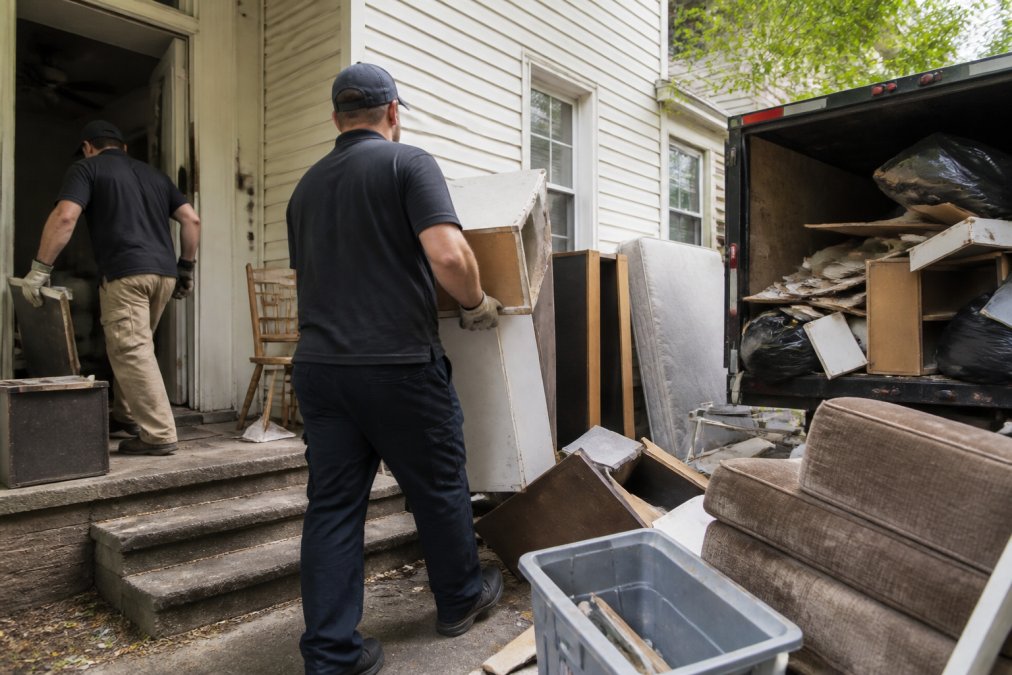
A fast property cleanout in Akron, Ohio, starts long before the truck pulls into the driveway. It starts with a decision: what stays, what goes, and who hauls it. At Rubbish Outlaw Junk Removal, we've learned that the homeowners, landlords, and estate executors who get the fastest turnaround are the ones who prepare before they call.
A property cleanout is the full removal of unwanted contents from a home, rental unit, or commercial space, including furniture, appliances, debris, and personal belongings, so the property can be sold, rented, or renovated.
You'll need four things before you book:
- A clear scope (which rooms, which outbuildings, which items are excluded)
- Proof of authority to clear the property (ownership, executor status, or property management agreement)
- A parking plan for the truck and crew
- A decision on what happens to usable items, donation or disposal
Here's what most guides miss: the bottleneck is rarely the hauling. It's the sorting decision. Settle that first and the job moves quickly.
Step 1: Assess the Scope of Your Residential or Commercial Cleanout
Scope assessment is the single biggest predictor of how long a cleanout takes. Walk the property room by room and note volume, access, and anything unusual.
Types of Property Cleanouts and What Each Involves
| Cleanout Type | Typical Contents | Key Consideration |
|---|---|---|
| Residential cleanout | Furniture, appliances, garage clutter | Access and stairs slow the crew |
| Commercial property clearing | Fixtures, office furniture, shelving | Loading dock or parking access |
| Estate clearing | Full household contents | Sorting keepsakes from disposal |
| Eviction cleanup | Left-behind tenant belongings | Legal notice requirements |
| Foreclosure cleanout | Debris, neglected contents | Property preservation timelines |
Same-Day and Next-Day Service Availability
Same-day and next-day availability depends on crew capacity, not willingness. Ask two questions when you call: how many crews run today, and what's the earliest window. A provider with multiple trucks can usually fit an urgent landlord turnover; a single-crew operation cannot.
Step 2: Understand Estate Cleanout Services Cost and Upfront Pricing
Estate cleanout services cost depends on volume, access, and disposal fees, which is why a legitimate provider quotes after seeing the job or reviewing photos. Anyone quoting a firm number over the phone without details is guessing.
DIY vs. Professional Cost Analysis
DIY saves the labor line and adds everything else: dumpster rental, dump fees, truck wear, time off work, and the risk of improper disposal. Professional hauling bundles all of it. The break-even point usually lands where the job exceeds one truckload or involves heavy items, stairs, or regulated waste.
Step 3: Follow a Foreclosure Cleanout Checklist for Compliance
A foreclosure cleanout checklist exists to protect you legally as much as to organize the work. Foreclosure debris removal and property preservation work carry documentation requirements that a casual cleanout does not, and the difference between a defensible job and a lawsuit often comes down to what you photographed and when.
Property preservation work is typically governed by investor and servicer guidelines layered on top of state law. If you are clearing a property on behalf of a servicer or investor, confirm the current property preservation matrix requirements before the crew arrives, those matrices dictate allowable debris volume, photo counts, and whether personal property must be inventoried or held. Skipping that step is the most common reason a completed cleanout gets rejected and re-billed.
Pre-Cleanout Checklist
Run this list in order. Each item exists because a skipped step has cost someone a claim, a chargeback, or a re-clean.
- Confirm legal authority to enter and clear the property (deed, assignment, court order, or management agreement)
- Verify the property is actually vacant and secure before scheduling
- Photograph every room, closet, and outbuilding before removal, wide shot plus close-up of anything of value
- Inventory and store personal property with potential value; photograph each item and its storage location
- Follow required notice procedures for occupant belongings and document the date, method, and recipient
- Separate regulated waste (paint, batteries, chemicals, tires, propane) before loading
- Keep disposal and donation receipts with the job file
- Photograph the cleared property from the same angles as the before photos
- Log the date, crew, and truck for every load hauled
Legal and Liability Considerations for Landlords
Landlords in Ohio must follow statutory notice and disposal procedures before removing a tenant's abandoned property. Getting this wrong exposes you to claims even when the tenant owes rent, wrongful disposal and conversion claims do not disappear because the lease was breached. Check current Ohio Revised Code requirements and local court guidance through Ohio Laws and Administrative Rules before you schedule removal, and keep written records of every step.
The practical mechanics matter as much as the statute. A defensible eviction or foreclosure cleanout usually includes: written notice sent by a method you can prove, a waiting period that matches the statute, a dated photo inventory of everything removed, and a storage decision for items of apparent value. If you cannot prove you gave notice, the rest of your documentation will not save the job.
DIY vs. Professional Cost Analysis for Compliance Work
On a compliance-sensitive job, DIY saves the labor line and adds legal risk that is hard to price. Dumpster rental, dump fees, truck wear, and time off work are the visible costs. The invisible cost is a documentation gap: a homeowner with a phone camera rarely produces the photo set, notice log, and disposal receipts a servicer or court expects. Professional hauling bundles the labor and the paper trail. The break-even point usually lands where the job exceeds one truckload, involves heavy items or stairs, or touches regulated waste, and it lands earlier when the job has any legal exposure at all.
Step 4: Use a Hoarder House Cleanup Process That Works
A hoarder house cleanup process works when it's staged, not rushed. Crews clear pathways first, remove trash and debris in passes, then handle salvageable items, then deep-clean the structure. Trying to sort everything in one pass stalls the job.
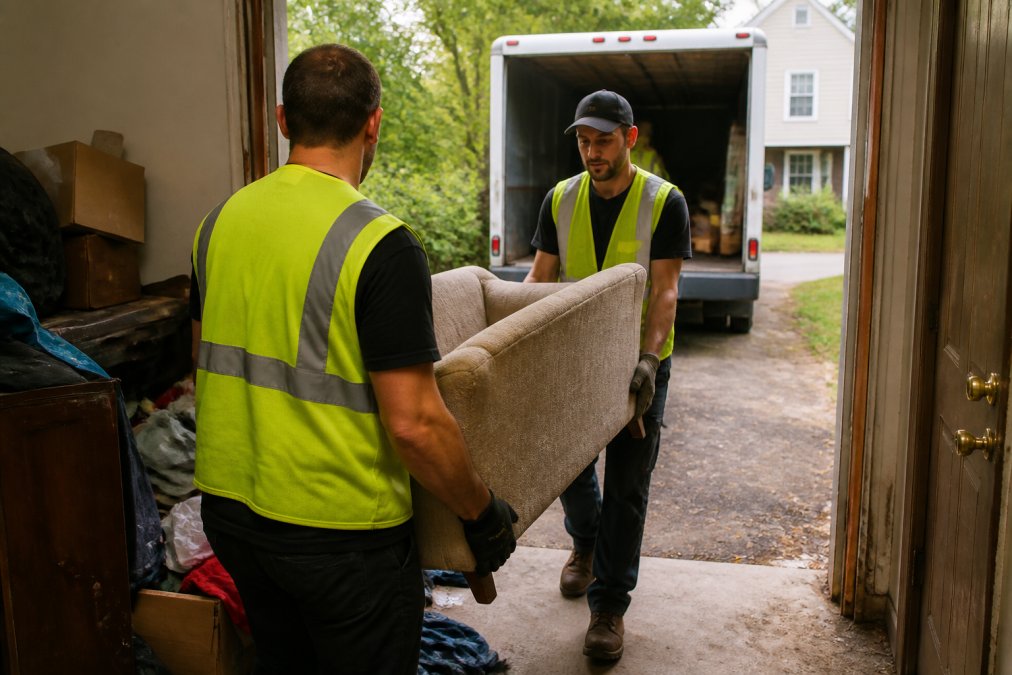
The practical sequence:
- Clear a safe path to every room
- Remove obvious trash and bulk debris
- Set aside items for donation or family review
- Remove remaining contents
- Sweep and prepare for cleaning or renovation
Providers who specialize in hoarding situations handle the emotional weight as well as the volume. Family members often need time to review keepsakes before final removal, and a good crew builds that pause into the schedule.
Donation and Charity Logistics
Donation logistics should be settled before removal day. Usable furniture, clothing, and household goods can go to local charities, which reduces disposal volume and often reduces cost. Ask your provider whether they separate donations on site or require you to coordinate pickup separately.
Step 5: Handle Eviction Cleanup, Debris Hauling, and Bulk Item Removal
Eviction cleanup, debris hauling, and bulk item removal are usually combined into one job, but each has its own constraints. Treating them as one undifferentiated pile is how jobs stall on site.
Eviction cleanup requires documented notice before anything leaves the property. The removal itself is straightforward; the notice trail is the work. Keep the notice, the proof of delivery, and the dated inventory together in one file.
Debris hauling from renovation or demolition needs the right truck and the right disposal channel. Construction debris is heavier per cubic foot than household clutter, and some materials, drywall, treated lumber, shingles, carry disposal restrictions that general trash does not (Incident Waste Decision Support Tool (I-WASTE DST)). Confirm the provider hauls construction debris before you book, not after the truck is loaded.
Bulk item removal covers the oversized pieces standard curbside pickup will not take: mattresses, appliances, sofas, exercise equipment, and swing sets. Many municipal curbside programs require a scheduled pickup and a fee sticker, which is why these items pile up in garages and side yards instead of disappearing.
Donation and Charity Logistics
Donation logistics should be settled before removal day, and this is where a cleanout can do the most good. Usable furniture, clothing, and household goods can go to local charities, which reduces disposal volume and often reduces cost. The mechanics matter:
- Sort before the truck, not during. Designate a donation zone, a garage bay or driveway corner, so the crew knows what not to load.
- Know what charities accept. Most donation centers take clean clothing, working appliances, and undamaged furniture (Austin Worship and Service Center). They typically refuse mattresses, box springs, cribs, car seats, and anything stained or broken, because of safety and resale rules.
- Ask about pickup versus drop-off. Some organizations schedule truck pickups for large donations; others require you to deliver. Confirm before you promise a charity a truckload.
- Get a receipt. Donation receipts document the disposition of items, which matters on estate and foreclosure jobs where you may need to show what happened to personal property.
Ask your provider whether they separate donations on site or require you to coordinate pickup separately. A crew that sorts for donation during the job saves you a second haul and keeps usable goods out of the landfill.
Pre-Cleanout Checklist for Mixed Jobs
When one job combines eviction, debris, and bulk items, run this sequence:
- Confirm notice and authority for any tenant or occupant property
- Separate regulated waste and hazardous materials
- Pull donation items to the designated zone
- Stage bulk items near the load path, not buried in a back room
- Haul construction debris on its own load if volume warrants
- Keep receipts for disposal and donation with the job file
Common Mistakes to Avoid During a Fast Property Cleanout in Akron, Ohio
The mistakes that slow a cleanout down are predictable. Skipping the scope walk leads to underestimates. Choosing on price alone leads to surprise fees. Failing to document leads to legal exposure on eviction and foreclosure jobs. Leaving hazardous waste in the pile leads to a stopped truck.
The biggest one: waiting until the last minute. Landlords with a tight turnover window who call a day before the new tenant moves in rarely get the slot they want. Book as soon as you know the unit is empty.
Frequently Asked Questions
How much does a professional property cleanout cost in Akron?
Pricing depends on the volume of items, the type of debris, and how quickly you need the job done. Most providers charge by truckload or by the amount of space your items take up in the truck. For an accurate number, request a free estimate. A reputable company will walk the property, give you an upfront price before any work starts, and explain exactly what is included in the quote.
What is included in a full house cleanout service?
A full-service property cleanout typically covers sorting, loading, hauling, and disposal of unwanted items. That includes furniture, appliances, bulk item removal, and general debris. Many companies also handle light demolition, donation drop-offs, and recycling services. Ask whether the quote covers labor, dump fees, and any permits. For estate or foreclosure situations, confirm the provider is licensed and insured and offers upfront pricing before the crew arrives.
Do junk removal companies in Akron handle hazardous waste?
Most junk removal companies cannot legally haul hazardous materials such as paint cans, batteries, motor oil, or chemicals. These items require special handling under state and federal rules. Ask your provider which items they accept and which ones you need to drop off at a local household hazardous waste facility. A professional crew will sort these out during the pre-cleanout walkthrough so nothing gets dumped illegally.
How do I prepare for a professional property cleanout?
Start by removing personal items, documents, and anything with sentimental or financial value. Mark what stays and what goes. Clear a path to the main entry so the crew can move quickly. If you are handling an estate or hoarder house cleanup process, take photos before the work begins for your records. Confirm the pickup time, parking access, and whether the company offers same-day or next-day availability so the job stays on schedule.
Clearing a property under deadline is stressful, and the last thing you need is a provider who overpromises and underdelivers. Rubbish Outlaw Junk Removal handles residential and commercial cleanouts, estate and hoarder house clearouts, demolition debris, and specialized removals for properties across Akron and Canton, with upfront pricing and crews built for fast turnaround. Get your free estimate from Rubbish Outlaw Junk Removal and reclaim the space without the wait.