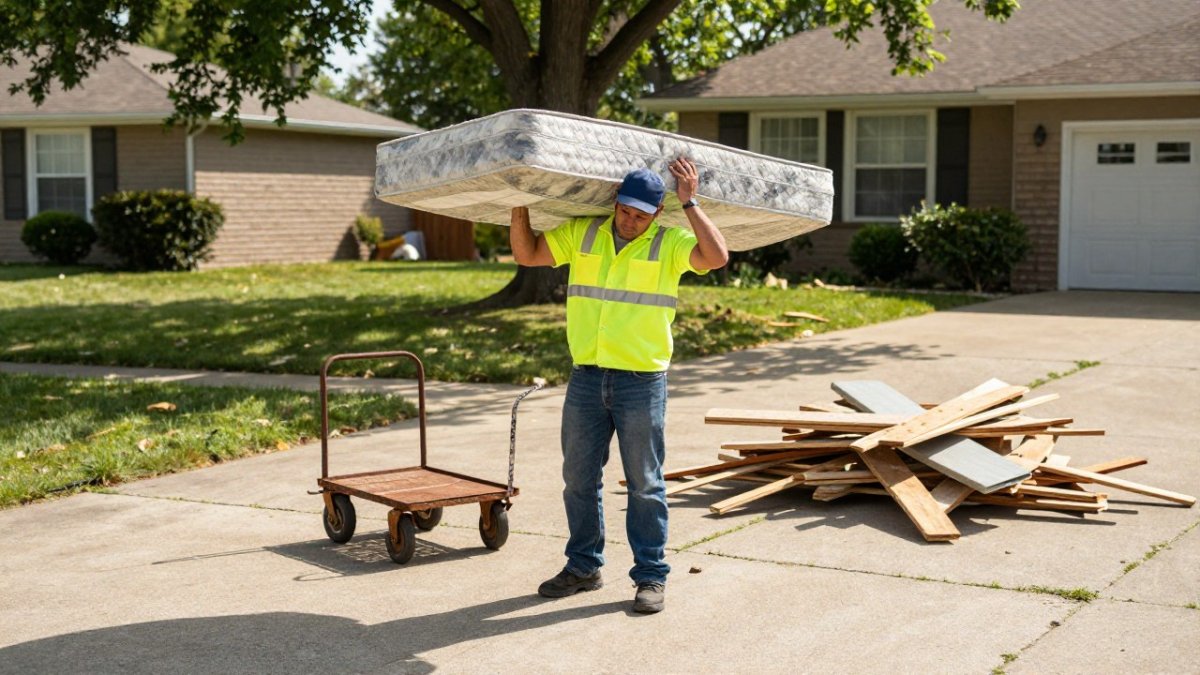
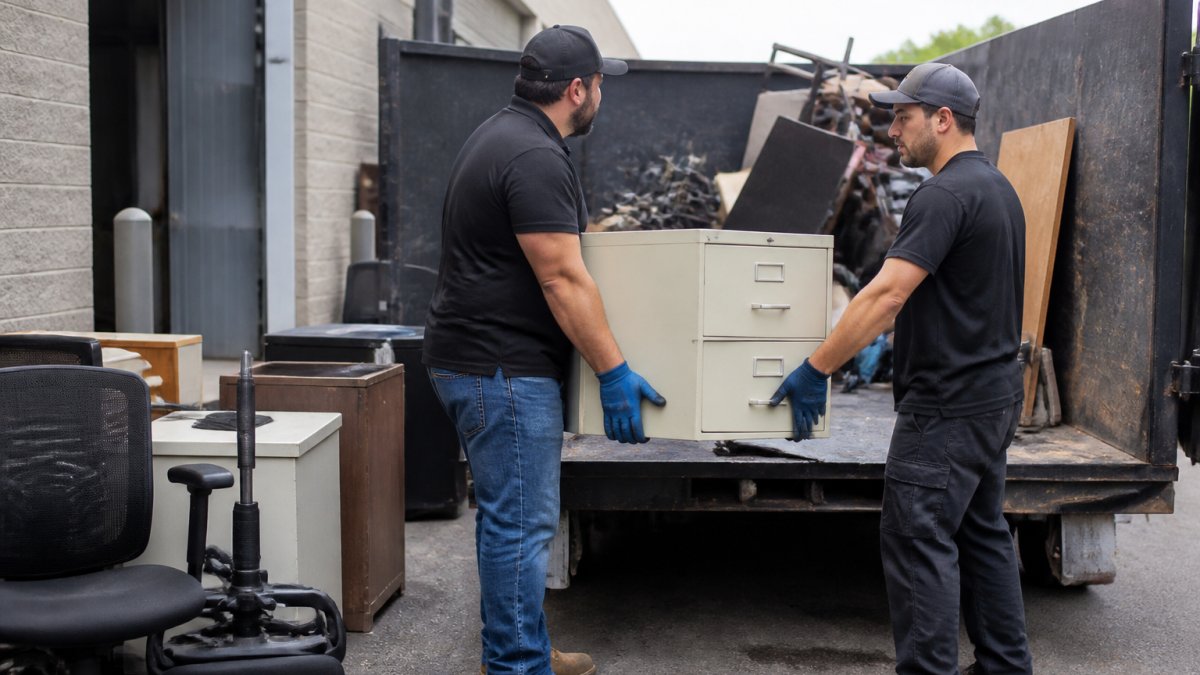
 how-to
Junk Removal Services for Businesses: 2026 Guide
Table of Contents
- What Business Junk Removal Covers (and What It Doesn't)
- Commercial Junk Removal Cost: Pricing Models and Quote Comparison
- Office Furniture Removal: Cubicles, Desks, and Equipment
- Planning a Commercial Property Cleanout Step by Step
- Bulk Item Pickup for Businesses: When Hauling Beats a Dumpster
- Compliance, Data Security, and Disposal Documentation
- Multi-Site and Large-Scale Cleanout Planning
- How to Choose and Evaluate a Commercial Provider
- Frequently Asked Questions
Last Updated: October 18, 2026
What Business Junk Removal Covers (and What It Doesn't)
Junk removal services for businesses is the scheduled collection, loading, hauling, and lawful disposal of unwanted items from commercial premises by a professional crew, and that is exactly what junk removal services for businesses should deliver.
That matters because most commercial cleanouts stall on labor, not on volume. A single office floor can hold dozens of desks, chairs, filing cabinets, and monitors, and none of it moves itself.
What you get from a full-service provider:
- On-site assessment and a written quote
- Crews that lift, load, and sweep up
- Hauling and disposal, with recycling and donation where possible
What you don't get: hazardous waste handling, regulated document destruction, and anything requiring a permit. Those are separate trades, and pretending otherwise is how businesses end up with a citation.
Commercial vs. Residential Hauling: The Real Differences
Commercial junk removal is not residential hauling with a bigger truck. The differences that matter:
- Volume and access. Loading docks, freight elevators, and after-hours windows change the job plan.
- Liability and insurance. A licensed and insured provider should be able to produce a certificate before crews enter your building.
- Scheduling. Business junk removal usually runs around operations, not during them.
A common mistake is booking a residential crew for a warehouse cleanout. They show up under-crewed, and the job takes three days instead of one.
Items Accepted and Items You Must Handle Separately
Most providers accept furniture, cubicles, desks, chairs, shelving, appliances, carpet, pallets, scrap metal, and general debris.
Handle these separately:
- Electronic waste. E-waste needs a certified recycler in most states.
- Hazardous materials. Paint, solvents, batteries, and fluorescent tubes require special handling.
- Regulated documents. Paper with personal or financial data needs shredding first.
Ask before pickup day. A reliable service will tell you plainly what it can and cannot take.
Commercial Junk Removal Cost: Pricing Models and Quote Comparison
Commercial junk removal cost depends on volume, access, labor, and disposal fees, not on a flat rate. Most providers quote after seeing the load. Expect three common models:
| Pricing Model | How It Works | Best For |
|---|---|---|
| Truck-load tiers | Price per fraction of truck filled | Single-room and small office cleanouts |
| Item-based | Fixed price per item or category | Furniture removal with known counts |
| Hourly plus disposal | Labor rate plus tipping fees | Large or unpredictable cleanouts |
At Rubbish Outlaw Junk Removal, pricing depends on the size of the job, access, and what's being removed. We give a free estimate before any work starts, so there are no surprises on the invoice.
What Actually Drives the Price Up or Down
Two quotes for the same pile can differ by hundreds of dollars. The variables that move the number:
- Volume, measured in truck fractions. A 15-yard dump truck fills faster than most people expect. A single office floor of cubicles and desks often fills a full truck.
- Weight and disposal fees. Tipping fees are charged by the ton at the landfill or transfer station. Heavy loads, concrete, pallets, dense debris, cost more to dispose of than bulky-but-light loads like cubicles.
- Access and carry distance. A loading dock at grade is cheap. A third-floor walk-up with no elevator and a 200-foot carry adds labor hours.
How to Compare Two Commercial Quotes Line by Line
Put both quotes side by side and check these lines:
- Scope. Does the quote include lifting and loading, or just hauling?
- Disposal fees. Are tipping fees included or billed after?
- Access charges. Stairs, long carries, and elevator restrictions add labor.
- Disassembly. Is cubicle and fixture teardown included?
- Exclusions. What happens to e-waste, hazardous items, and documents?
- Documentation. Is a disposal summary included, or an add-on?
If one quote is dramatically lower, it usually excludes disposal or labor. Ask directly. The cheapest quote is rarely the cheapest job.
A Simple Way to Normalize Quotes
Ask each provider to quote the same scope in writing: same item list, same access window, same disposal responsibility. Then compare the all-in number, labor plus disposal plus any access charges, rather than the headline rate. A provider that will not put scope and disposal in writing is telling you something.
Office Furniture Removal: Cubicles, Desks, and Equipment
Office furniture removal is the most common commercial job we run, and cubicles are the hardest part.
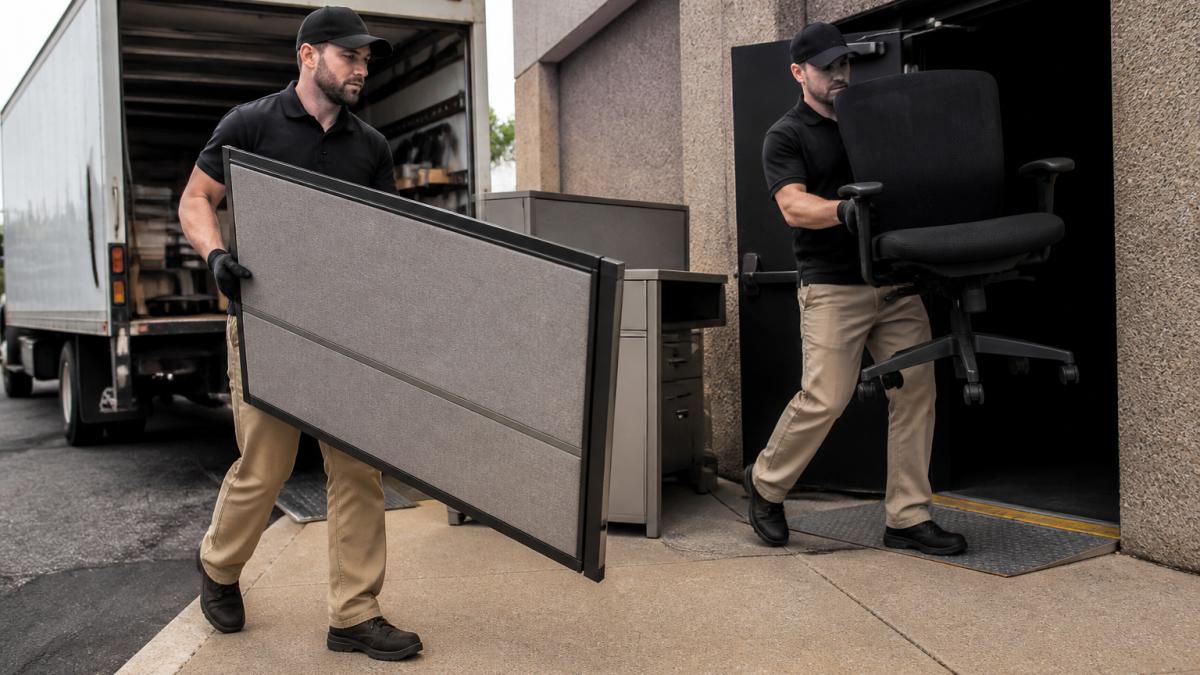
Cubicle panels are heavy, awkward, and often bolted together. Crews disassemble them, carry them out in sections, and load them flat. Desks and filing cabinets go next, then monitors and equipment.
Two things to decide before the crew arrives:
- What's reusable. Usable furniture can often be donated, which cuts disposal volume.
- What holds data. Hard drives and copiers with storage need wiping or certified destruction before they leave the building.
What most guides miss: the loading sequence. Crews work room by room, largest items first, so the exit path stays clear.
Planning a Commercial Property Cleanout Step by Step
A commercial property cleanout runs on a plan, not on manpower. Here is the sequence we use:
- Walk the space and list what's leaving. Room by room, note furniture, equipment, debris, and anything hazardous.
- Separate the exceptions. Pull e-waste, chemicals, and documents into their own pile.
- Set a date and access window. Confirm dock hours, elevator bookings, and parking.
- Get a written quote. Confirm scope, disposal, and exclusions.
- Notify staff and tenants. Tell them what to clear and by when.
- Stage items near the exit. Reduce carry distance before the crew arrives.
- Book the pickup. Confirm crew size and truck count.
- Get disposal documentation. Keep it for your records.
For a rental property cleanout between tenants, steps 3 and 7 compress into a single day. Tell the provider your deadline up front and confirm crew capacity before you sign.
Bulk Item Pickup for Businesses: When Hauling Beats a Dumpster
Bulk item pickup for businesses wins when the load is heavy, awkward, or short-lived. A dumpster wins when debris is loose, continuous, and generated over weeks.
Choose hauling when:
- Items need lifting, not tossing
- The cleanout happens once, not daily
- Site space is too tight for a container
Choose a dumpster when:
- Debris is loose and continuous
- A renovation runs for weeks
- You have room and a permit if required
Contractors often assume a dumpster is always cheaper. On a short interior demolition, a hauling crew that lifts, loads, and leaves in one visit frequently costs less than a container sitting on site for a month.
Compliance, Data Security, and Disposal Documentation
Compliance is where cheap junk removal gets expensive. Two risks dominate: illegal dumping and data exposure. The fix is documentation you can produce on request.
Disposal: What to Ask and What to Keep
Federal rules on solid waste disposal sit with the EPA's solid waste guidance, and states add their own. If a hauler cannot tell you the destination, walk away.
Ask every provider for a disposal summary that names:
- What was recycled and where it went (a materials recovery facility, a scrap yard, a certified e-waste recycler).
- What was donated and to which organization, with a receipt or acknowledgment if available.
- What went to landfill and at which facility.
A one-page summary is enough for most landlords, insurers, and corporate clients. For larger projects, ask whether the provider can supply landfill or transfer-station receipts. Keep the summary with your project file.
Data Security: Treat Every Device as Loaded
On data, treat every device as a liability until wiped. Copiers, printers, computers, and drives all store information. The FTC's data disposal guidance is blunt: dispose of sensitive data properly or risk real harm to the business. Wipe or destroy before removal, and keep a record.
A workable sequence:
- Inventory devices before the crew arrives, computers, drives, copiers, printers, point-of-sale terminals, and any device with storage.
- Wipe or destroy using your IT process or a certified destruction vendor.
- Record it, serial numbers, method (wipe or physical destruction), date, and who performed it.
- Remove the record from the device before it leaves the building, or keep the device until destruction is confirmed.
E-Waste and Hazardous Materials
E-waste needs a certified recycler in most states. Hazardous materials, paint, solvents, batteries, and fluorescent tubes, require special handling and are usually excluded from general junk removal. Ask the provider to name the recycler or handler they use, and keep that name with your disposal summary.
What a Defensible Record Looks Like
For most businesses, a defensible record is three things: a written scope of what left the building, a disposal summary naming destinations, and a data-destruction record for any device with storage. Store them together. If a landlord, insurer, or auditor ever asks what was removed and where it went, you can answer in minutes.
Multi-Site and Large-Scale Cleanout Planning
Multi-site cleanouts fail on coordination, not on labor.
What works:
- Batch by geography. Group sites so one crew handles several in a day.
- Standardize the scope. Same list per site makes quotes comparable.
- Assign one contact per site. Nothing stalls waiting for approval.
Warehouses and retail spaces add their own wrinkle: fixture removal. Shelving, gondolas, and display cases are heavy and bolted down. Confirm the crew handles disassembly before you book.
For large portfolios, ask for a single point of contact and a written schedule. A provider that cannot plan across sites will not execute across sites.
How to Choose and Evaluate a Commercial Provider
Choosing a commercial provider comes down to five checks, and reviews are only one of them.
- Licensing and insurance. Ask for a certificate before booking.
- Commercial experience. Confirm they handle business premises, not just homes.
- Scope clarity. The quote should name lifting, loading, hauling, and disposal.
- Disposal transparency. They should state where materials go.
- Capacity. Ask how many crews they can commit and on what notice.
Customer reviews and ratings help, but a five-star rating on residential jobs tells you little about a warehouse cleanout. Ask for references from commercial clients.
At Rubbish Outlaw Junk Removal, we serve businesses and residents across Akron and Canton with fast service, free estimates, and full-service removal that includes demolition and debris removal.
Frequently Asked Questions
How much does commercial junk removal cost?
Most providers price commercial jobs by volume, weight, or truckload, and the final number depends on how much material you have, the access at your site, and disposal fees in your area. Always get a written quote that lists labor, hauling, and disposal separately so you can compare bids fairly.
What items can a commercial junk removal service take?
Standard commercial hauling covers office furniture, cubicles, desks, chairs, filing cabinets, shelving, retail fixtures, warehouse racking, pallets, cardboard, construction debris, and most non-hazardous equipment. Electronics such as computers and monitors are usually accepted as e-waste and routed to recycling. Hazardous items like paint, batteries, solvents, and fluorescent bulbs typically need separate handling. Ask your provider for a written accepted-items list before pickup day so nothing gets turned away at the curb.
How do businesses prepare for a junk removal pickup?
Walk the space first and separate keep, donate, recycle, and dispose piles. Clear a path to the loading area and confirm door widths and elevator access for large furniture. Remove personal items and lock up confidential documents or hard drives you plan to destroy yourself. Assign one employee as the on-site contact, and confirm the arrival window and parking plan with your provider. A prepared site usually shortens the job and keeps the quote accurate.
Can junk removal companies clear out office furniture and equipment?
Yes. Full-service office furniture removal covers disassembly, lifting, loading, and hauling, so your staff does not need to move cubicles or desks themselves. Crews typically dismantle modular workstations and remove chairs, monitors, and filing cabinets in one visit. Confirm in advance whether disassembly and any building protection, such as elevator pads or floor runners, are included in the quote, and ask where usable furniture goes so donation is documented if your company needs that record.
A commercial cleanout stalls when the plan, the crew, and the paperwork don't line up. Rubbish Outlaw Junk Removal handles all three: free estimates before you commit, crews that lift and load so your staff doesn't, and hauling with disposal handled. We serve Akron and Canton with fast, affordable junk removal services for businesses, from a single office floor to a full property cleanout. Get your free estimate and put a date on the calendar.