 how-to
Junk Removal for Garage Cleanouts: A How-To Guide
Table of Contents
- What a Garage Cleanout Service Actually Does
- DIY vs. Professional Junk Removal: A Cost-Benefit Breakdown
- What Junk Removal Pricing Factors Determine Your Final Bill
- How the Garage Cleanout Process Works, Step by Step
- Your Garage Cleanout Checklist: What to Do Before the Crew Arrives
- What About the Cost of a Whole House Cleanout?
- Hazardous Waste, Donations, and Recycling: Getting Disposal Right
- Keeping the Garage Clear After the Cleanout
- Frequently Asked Questions
Last Updated: September 25, 2026
What a Garage Cleanout Service Actually Does
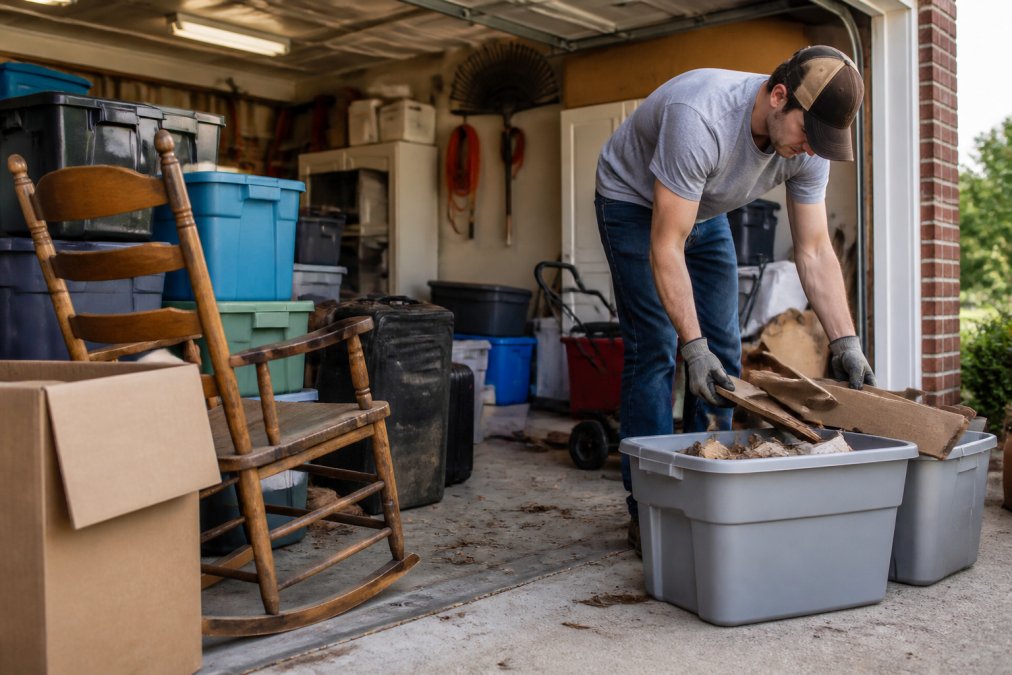
Junk removal for garage cleanouts means a trained crew loads, hauls, and disposes of unwanted items from your garage, usually in one visit. At Rubbish Outlaw Junk Removal, we handle the lifting, loading, and disposal so you don't touch a thing. Garage cleanouts are our core work in Akron and Canton, Ohio.
Full-Service vs. Dumpster Rental
Full-service junk removal means a crew does the loading and disposal; dumpster rental means you do the work yourself.
Here's the practical split:
- Full-service: Crew loads, hauls, and disposes. Best for heavy items, tight timelines, and anyone who can't lift safely.
- Dumpster rental: You fill the container. Best for ongoing projects like roofing or remodeling debris.
- Cost driver: Full-service pricing includes labor and disposal. Rental pricing covers the container and dump fees only.
DIY vs. Professional Junk Removal: A Cost-Benefit Breakdown
Most garage cleanout decisions come down to one question: is it cheaper to DIY or hire a crew? The answer depends on volume, weight, access, and what your time is worth.
The Four Cost Buckets
Every garage cleanout hits the same four cost buckets, the difference is who pays them.
- Labor: Your weekends versus a crew's hourly rate. A packed two-car garage is typically 8-20 crew-hours.
- Transport: A rental truck or trailer (plus fuel) versus a box truck already on site.
- Disposal: Landfill tipping fees by weight, plus recycling and specialty fees, the same either way, the pro just passes them through.
- Your time: Two to four full days is a realistic DIY timeline for a packed garage.
When DIY Actually Wins
DIY wins when all of these are true:
- The load fits in one or two pickup-truck or small-trailer trips.
- Nothing weighs more than you can safely lift with a partner, no appliances, no concrete, no full file cabinets.
- You have free or cheap access to a truck or trailer.
- Your local transfer station accepts the items and is a short drive.
- You have a free weekend and no deadline.
A few boxes, old shelving, and a broken lawnmower? Rent a trailer, make one trip, and save the hauling fee.
When Professional Hauling Wins
The math flips once any of these show up:
- Heavy or awkward items. Refrigerators, treadmills, water heaters, and cast-iron sinks need two people and a dolly. Injury risk and rental damage fees eat the savings.
- Multiple trips. Three or more truck trips usually climb past a flat-rate hauling quote.
- Restricted items. Tires, mattresses, e-waste, and appliances often carry separate disposal fees or a specific drop-off site.
- Tight access. A garage behind a fence, up a slope, or with low clearance adds time to every item.
- A deadline. Estate sales, home listings, and move-out dates don't wait for your next free Saturday.
A Simple Decision Rule
Run this test before you commit:
- Estimate the load in truck beds. One full-size pickup bed ≈ one-quarter of a box truck.
- Count the items you cannot lift alone. More than two, lean professional.
- Multiply your DIY hours by your hourly worth, then add rental, fuel, and dump fees.
- Compare that total to an on-site hauling quote.
If the two numbers are within roughly 20%, hire the crew, you're buying back a weekend and removing injury risk for almost nothing.
What Junk Removal Pricing Factors Determine Your Final Bill
Junk removal pricing factors come down to four things: volume, weight, labor, and disposal fees. Reputable companies quote on-site before work starts, so you approve the number first.
The factors that move your price:
- Volume: How much space your items take in the truck
- Load size: Minimum charge up to a full truck
- Weight: Heavy items like concrete or dirt cost more to dispose of
- Labor: Stairs, tight access, or long carries add time
- Disposal fees: Landfill, recycling, and specialty fees vary by item
Volume-Based Pricing and Load Size
Volume-based pricing means you pay for the space your junk fills, not by the hour. A single couch costs less than a quarter-truck load; a whole garage usually fills a full truck.
Load size tiers typically look like this:
| Load Size | What It Fits | Typical Use |
|---|---|---|
| Single item | One couch, fridge, or mattress | Quick pickup |
| Quarter truck | A few bulky items | Small cleanout |
| Half truck | Half a garage | Medium cleanout |
| Full truck | A packed two-car garage | Full cleanout |
How the Garage Cleanout Process Works, Step by Step
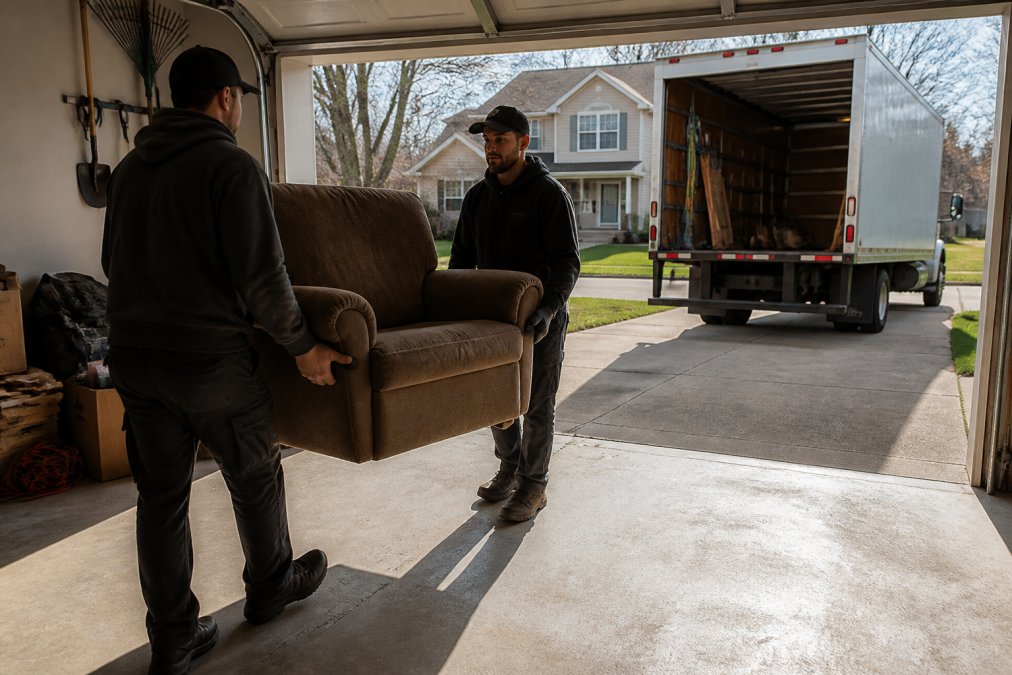
Most garage cleanouts follow the same five steps and wrap in a few hours.
- Book your appointment. Call or request a free estimate online. Same-day and next-day slots are often available.
- Get an on-site estimate. The crew arrives, looks at your items, and gives you a firm price before starting.
- Approve the quote. No surprises, no hidden fees. You say yes or no.
- The crew hauls everything. They lift, load, and carry it all out to the truck.
- Disposal and cleanup. Items go to recycling centers, donation centers, or the landfill. You get your garage back.
Your Garage Cleanout Checklist: What to Do Before the Crew Arrives
A little prep makes the job faster and cheaper. Use this garage cleanout checklist the day before your appointment.
- Sort items into keep, donate, and toss piles
- Set aside anything you want to keep in a labeled area
- Clear a path to the garage door for the crew
- Move vehicles out of the driveway
- Pull out hazardous items like paint, batteries, and propane tanks
- Confirm the appointment time and address
- Ask about parking and any gate codes
What About the Cost of a Whole House Cleanout?
The cost of a whole house cleanout depends on how much is inside, how many rooms are involved, and how much is heavy debris. A garage is one load; a whole house is usually several.
Whole house cleanouts often include:
- Furniture removal from every room
- Appliance hauling from kitchen and laundry
- Estate cleanout items after a passing or move
- Construction debris from renovations
- Attic, basement, and shed contents
Hazardous Waste, Donations, and Recycling: Getting Disposal Right
Not everything in a garage can go on the truck. The biggest reason garage cleanouts go sideways is mixing household hazardous waste into a regular load, which can get the whole truck rejected at the landfill and trigger a penalty. Here's how to sort the three streams.
What Counts as Hazardous (and Why It's Banned)
Household hazardous waste is anything flammable, corrosive, reactive, or toxic. Landfills ban it because it can leach into groundwater, ignite in a compactor, or contaminate recyclables.
Common garage items that fall into this category:
- Paints and finishes: latex and oil-based paint, stain, varnish, polyurethane, paint thinner, and mineral spirits
- Automotive fluids: motor oil, antifreeze, brake fluid, transmission fluid, and gasoline
- Batteries: car batteries, lawn-mower batteries, lithium-ion packs, and standard household batteries
- Pressurized containers: propane tanks, aerosol cans, and fire extinguishers
- Yard and shop chemicals: pesticides, herbicides, fertilizer, pool chemicals, and solvents
- Tires: whole tires are banned from most landfills and carry a separate disposal fee
How to Actually Dispose of It
Hazardous waste does not go in the trash, recycling bin, or a rental dumpster. It goes to a licensed household hazardous waste facility. Most counties run periodic drop-off days or a permanent collection site, usually free for residents.
A few practical notes:
- Keep items in their original labeled containers when possible. Never mix chemicals into an unlabeled jug.
- Transport in a sturdy box in the trunk or truck bed, not loose in the cabin.
- Check your county's solid waste authority website for drop-off days, accepted items, and any residency requirements.
- The EPA household hazardous waste guidance explains what counts as hazardous and how to handle it safely.
Donations: What's Actually Accepted
Donation centers are pickier than most people expect. Usable is not the same as acceptable.
- Usually accepted: clean clothing, working small appliances, furniture in good condition, books, tools, and bicycles
- Usually refused: upholstered furniture with stains, tears, or odors; cribs and car seats (safety recalls); mattresses; and anything broken beyond repair
Recycling: Where the Real Volume Goes
Recycling is where most of a garage cleanout's weight ends up, keeping usable material out of the landfill.
- Scrap metal: old grills, bikes, lawnmowers, shelving, and exercise equipment. Scrap yards pay by weight, so this stream can offset part of the haul.
- Electronics: TVs, monitors, computers, and printers go to certified e-waste recyclers, never the curbside bin.
- Cardboard and paper: break down boxes to save truck space.
- Appliances: many contain refrigerants or capacitors that require certified recovery before recycling.
Keeping the Garage Clear After the Cleanout
An empty garage fills back up within a year if you don't change how you use it. Staying clear takes a simple system.
What works:
- Zones: Give tools, sports gear, and seasonal items their own wall or shelf
- Vertical storage: Use wall racks and ceiling hooks for bikes and ladders
- One-in, one-out rule: New item in, old item out the same day
- Quarterly sweep: Fifteen minutes every few months catches clutter early
- No dumping ground: Keep the floor clear so the garage stays usable
Frequently Asked Questions
What is the average cost to clean out a garage?
There is no single average because garage cleanouts are priced by volume, labor, and disposal fees. A single-item pickup costs far less than a packed two-car garage. Most companies, including Rubbish Outlaw Junk Removal, offer a free on-site estimate so you know the price before any work begins. Request a quote to get an exact number for your garage.
What items will junk removal companies not take?
Most full-service junk removal companies cannot accept hazardous waste such as wet paint, motor oil, batteries, tires, and propane tanks because of federal and state disposal rules. Appliances with refrigerant, like refrigerators and air conditioners, also require special handling. Ask your provider how they handle these items before the pickup day so nothing is left behind in your garage.
How do I prepare for a professional garage cleanout?
Sort your belongings into three groups: keep, donate, and discard. Pull out anything you want to keep and move it to another room or a marked corner. Clear a path to the garage door so the crew can work quickly, and unlock any gates or side doors. If you have hazardous items, set them aside and tell the crew lead when they arrive.
Does junk removal for garage cleanouts include donation and recycling?
Reputable companies sort your items and route usable goods to donation centers and scrap metal to recycling centers whenever possible. Electronics and appliances go to specialized facilities. Ask your provider where your items end up, and request a receipt or donation slip if you want proof of eco-friendly disposal.