 ultimate-guide
Junk Removal Pricing by Truckload: 2026 Cost Guide
Table of Contents
- How Junk Removal Pricing by Truckload Is Calculated
- Factors Affecting Junk Removal Prices
- Junk Removal Minimum Charge: Why Small Loads Cost More
- How to Estimate Junk Removal Volume Before You Book
- Truckload Pricing vs. Dumpster Rental vs. Labor-Only
- Hazardous Waste, Donation, and Regional Cost Adjustments
- How to Get an Accurate Junk Removal Estimate
- Frequently Asked Questions
Last Updated: September 18, 2026
How Junk Removal Pricing by Truckload Is Calculated
Most junk removal companies price by how much space your items take up in the truck, not by weight or a flat fee. That single fact explains why two neighbors with similar-looking piles can get quoted very different amounts. This guide breaks down exactly how junk removal pricing by truckload works, what pushes costs up, and how to estimate your own load before you call anyone.
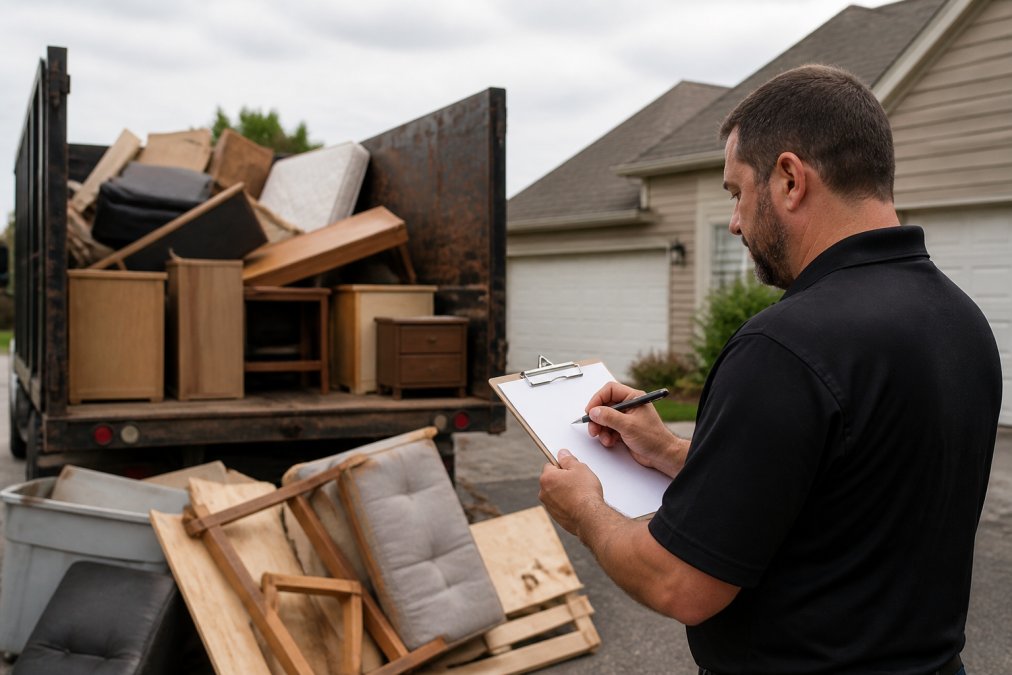
Here's the core mechanic: a truck bed has a fixed capacity, and your quote reflects what percentage of that capacity your junk fills. A single mattress might take up 10% of the truck. A full garage cleanout might take 100%. Same truck, same crew, wildly different prices.
Volume-Based Pricing Explained
Volume-based pricing means you pay for the fraction of the truck your debris occupies. Companies divide the truck bed into fractions, typically eighths or quarters, and quote you based on which fraction your load fills.
A cubic yard is the standard unit here. One cubic yard is roughly the size of a washing machine. Most junk removal trucks hold between 12 and 20 cubic yards, though exact capacity varies by company and vehicle.
This model rewards you for being efficient. Break down furniture, stack boxes tightly, and bag loose debris, and you can often fit the same amount of stuff into a smaller fraction of the truck.
What Constitutes a Full Truckload
A full truckload means your junk fills the entire truck bed from floor to ceiling, front to back, with nothing left over. In practice, this usually means a whole-home cleanout, a garage and basement combined, or a large estate clearance.
Most people overestimate how much space their junk takes up.
Factors Affecting Junk Removal Prices
Beyond volume, several variables move your final number. Understanding them helps you spot a fair quote and avoid surprises.
The biggest factors are:
- Labor costs for the crew loading and hauling your items
- Disposal fees charged by the landfill or transfer station
- Item-specific pricing for oversized or heavy single items
- Accessibility: stairs, tight doorways, and long carries add time
- Weight limits: some loads, like concrete or dirt, hit weight caps before they fill the truck
Extra Fees: Item-Specific, Recycling, and Fuel Surcharges
Certain items carry their own price tag because they cost more to dispose of responsibly. A recycling surcharge applies when items like electronics, appliances, or mattresses need special processing rather than a standard landfill drop.
| Cost Factor | What Drives It | How to Reduce It |
|---|---|---|
| Volume | Fraction of truck filled | Break down and stack items |
| Labor | Crew time and access difficulty | Clear a path, move items curbside |
| Disposal fees | Landfill or transfer station rates | Separate recyclables |
| Item-specific fees | Special handling for certain items | Ask which items trigger fees |
| Fuel surcharge | Distance to disposal site | Bundle jobs on one visit |
Junk Removal Minimum Charge: Why Small Loads Cost More
A minimum service charge exists because sending a truck and crew to your property costs the same whether you have one couch or a full garage. That fixed cost is why a single item often costs proportionally more per cubic yard than a full load.
How to Estimate Junk Removal Volume Before You Book
The most accurate way to estimate your load is to compare your pile against a known reference point and measure it in truck fractions. You don't need a tape measure, just a consistent visual anchor.
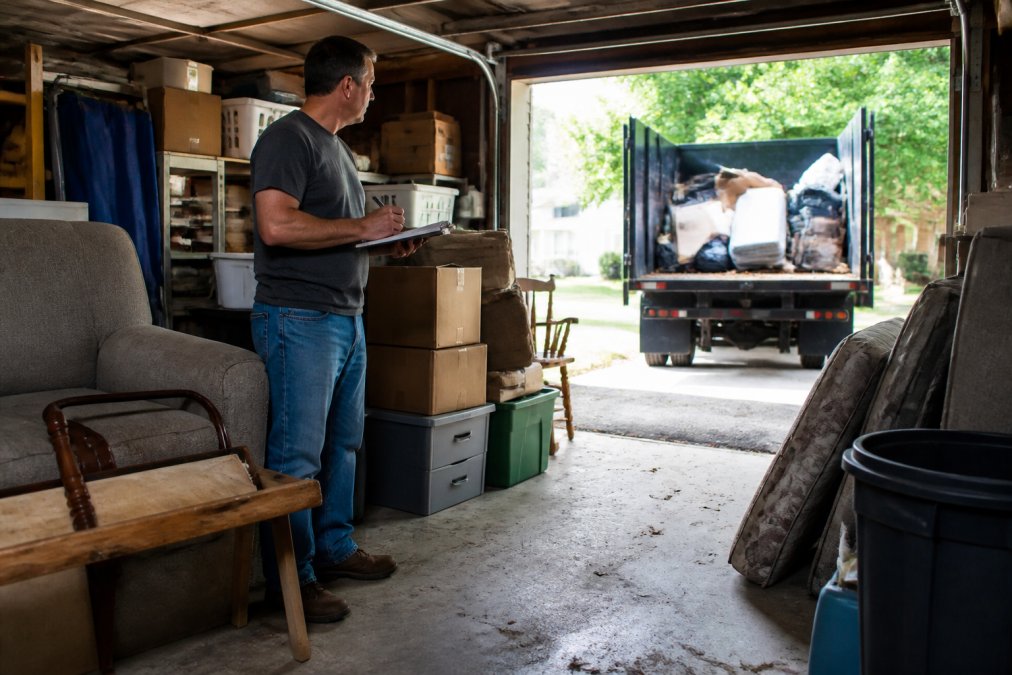
Here's a practical method:
- Pick a reference object, like a standard pickup truck bed or a washing machine.
- Estimate how many of those would fill your pile.
- Convert that estimate into eighths of a truck: 2 eighths, 4 eighths, 6 eighths, and so on.
- Note any heavy items (concrete, dirt, appliances) separately, since those may hit weight limits first.
- Photograph the pile from a few angles to share with the company.
Truckload Pricing vs. Dumpster Rental vs. Labor-Only
Three main service models exist, and each fits a different situation. Picking the wrong one is the most common way people overspend.
| Service Model | Who Does the Work | Best For | Trade-off |
|---|---|---|---|
| Full-service removal | Company loads and hauls | Estate cleanouts, hoarder situations | Highest cost per load |
| Dumpster rental | You load, company hauls | Renovations, construction debris | You supply the labor |
| Labor-only | You transport, they load | DIY haulers with a truck | You handle disposal logistics |
Hazardous Waste, Donation, and Regional Cost Adjustments
Three factors most pricing guides skip can change your final number significantly: what's in your pile, whether it can be donated, and where you live. Each deserves its own look.
Hazardous Waste: What Standard Trucks Legally Can't Take
Standard junk removal trucks are not licensed to haul hazardous waste, and most companies will refuse it outright. The list is longer than most homeowners expect:
- Paint, stain, and solvents (unless fully dried out in the can)
- Batteries, car, lithium-ion, and even many household batteries
- Motor oil, antifreeze, and other automotive fluids
- Propane tanks and pressurized canisters
- Pesticides, herbicides, and fertilizers
- Fluorescent bulbs and tubes (they contain mercury) (the EPA)
- Medical waste, sharps, and unused medications
- Tires (many states restrict landfill disposal; some companies take them for a per-tire fee)
Donation: When Giving It Away Lowers Your Bill
Items in good condition, furniture, clothing, working appliances, tools, and electronics, can often be donated rather than dumped. This matters to your quote for a simple reason: donation reduces the company's disposal cost, and some providers pass part of that savings back to you.
Ask two questions before you book:
- Does the company separate donations from trash? Not all do. Some haul everything straight to the landfill.
- Do they partner with a local charity or thrift network? Companies with established donation partners can often offer a lower rate on loads that are mostly donatable.
Regional Cost Adjustments: Why the Same Load Costs Different Amounts
A quote that seems high in one metro area may be standard in another. Operating costs swing with local landfill tipping fees, fuel prices, labor markets, and how far the nearest disposal site sits from the job. A dense urban market with expensive tipping fees can run 30-50% higher than a rural market for the identical load.
| Market Type | Typical Adjustment vs. National Average | What Drives It |
|---|---|---|
| High cost-of-living metro | 20-50% above | High tipping fees, labor, fuel, traffic time |
| Mid-size city or suburb | Roughly at average | Balanced disposal and labor costs |
| Rural or low cost-of-living area | 10-30% below | Cheaper tipping fees, shorter routes, lower labor |
How to Get an Accurate Junk Removal Estimate
The fastest route to an accurate quote is a photo-based estimate followed by an on-site confirmation. Companies that offer both tend to give the most reliable numbers.
To get the best estimate:
- Photograph your pile from multiple angles in good light
- Note the number of heavy or oversized items
- Mention stairs, tight access, or long carries
- List any hazardous materials separately
- Ask whether the quote is a flat rate or an hourly labor estimate
Frequently Asked Questions
How is junk removal pricing by truckload actually calculated?
Most junk removal companies price by how much space your items take up in the truck bed, measured in fractions of a full load. A single item might be one-eighth of a truck, while a garage cleanout could fill the whole bed. Labor costs, disposal fees, and item-specific charges for things like appliances or mattresses get added on top. That is why two jobs of the same weight can cost differently if one is bulkier or includes special-handling items.
What is the minimum charge for junk removal, and why does it exist?
A junk removal minimum charge covers the cost of sending a truck and crew to your property, regardless of how little you have. Even a single couch requires fuel, labor, and disposal fees. The minimum typically equals a small fraction of a truckload, so if your load is smaller than that, you still pay the minimum. Ask upfront what the minimum covers so there are no surprises on the invoice.
Does the type of debris affect junk removal truckload pricing?
Yes. Heavy materials like concrete, dirt, or roofing shingles can hit weight limits before the truck looks full, so some companies charge by weight for those loads. Items that require special disposal, such as tires, mattresses, electronics, and appliances with refrigerants, often carry item-specific fees. Hazardous materials like paint, batteries, and chemicals usually cannot go in a standard truckload at all and need separate handling.
How do I estimate how many truckloads my junk removal project will take?
Picture a standard pickup truck bed, about 8 feet long. A single large appliance or sofa takes roughly one-eighth of a full junk truck. A garage packed floor to ceiling usually fills one to two truckloads. A whole-house cleanout can run three to five. Walk through your space and group items by size, then compare against those benchmarks. A reputable company will do a free on-site assessment to confirm before quoting.