 How-to
What to Do With Old Appliances That Do Not Work
Quick Summary
Check whether the old appliances can be repaired, donated, or recycled before disposing of them. Simple fixes or working units can go to charities or thrift stores, while broken ones should go to local drop-off centers, scrap yards, or a pickup service.
- Check power, age, parts availability, and safety to decide whether the unit can be repaired.
- Donate only working, safe appliances, and call ahead because charities have strict rules.
- Contact your county or city solid waste office for drop-off hours and accepted items.
- Refrigerators and freezers contain refrigerant and often need separate handling or a certified technician.
- Remove batteries from small appliances and take them to a battery drop-off or hazardous waste site.
Table of Contents
- Check Whether the Appliance Can Be Repaired or Safely Donated
- Find Appliance Recycling Near Me Through Local Drop-Off Centers
- How to Dispose of a Washing Machine Step by Step
- Where to Recycle Small Kitchen Appliances
- Getting Free Appliance Removal and Retailer Haul-Away
- Safety Steps Before Moving or Hauling a Broken Appliance
- Booking Your Pickup and Clearing Out the Appliance with Rubbish Outlaw
- Frequently Asked Questions
Check Whether the Appliance Can Be Repaired or Safely Donated
Last Updated: November 17, 2026
Old appliances that do not work often end up in the garage or on the curb, but most of them can be handled more responsibly. Before you schedule any pickup, check whether the unit can be fixed, reused, or donated. If it cannot be repaired or donated, you can learn about Boat Removal on Rubbish Outlaw for bulky-item help. A quick check can save you money and keep usable items out of the landfill.
Start with a simple question: is the appliance broken in a way a repair shop could fix? Look at the plug, power cord, and any obvious damage. Many problems, like a clogged filter or a loose door latch, cost very little to fix. Other problems, like a failed compressor on a refrigerator, often cost more than the unit is worth.
Use these quick checks:
- Power: Does the unit turn on when plugged into a working outlet?
- Age: Is the appliance more than 10 years old?
- Parts: Are replacement parts easy to find for this model?
- Safety: Is there smoke, burning smell, or water damage?
If the appliance is safe and still runs, donation may be the better option. Local charities and thrift stores often accept working washers, dryers, and small kitchen appliances. Call ahead, because many groups have strict rules about age and condition.
Never donate an appliance that is unsafe or missing key parts. Damaged cords, cracked housings, and leaking refrigerant lines create real risks for the next owner. When in doubt, treat the unit as scrap.
Find Appliance Recycling Near Me Through Local Drop-Off Centers
Local drop-off centers are often the easiest way to recycle an appliance that will not work again, but the rules vary widely by municipality and facility. A search for appliance recycling near me usually turns up several options, and the right one depends on your address, the appliance type, and whether you can haul it yourself.
Start with your local government. Your county solid waste office or city public works department is the authoritative source for collection schedules, drop-off hours, and accepted items. Ask specifically whether they accept refrigerators and freezers, because units with refrigerant often require separate handling or a certified technician on site. Many cities also run seasonal collection events or bulky-waste pickup on a set schedule, sometimes once or twice a year. Confirm whether you must schedule in advance or place the item at the curb on a specific day.
Compare the common drop-off options side by side.
- County or city collection site: Often the lowest-cost option, but hours are limited and some sites charge a fee for appliances with refrigerant. Confirm whether a fee applies and whether you must remove doors or shelves first.
- Scrap metal yard: Many accept appliances with metal casings and may pay a small amount by weight, though the payout is usually modest. Call ahead to confirm accepted items and whether they require the refrigerant to be removed first.
- Retail take-back programs: Some stores accept old appliances when you buy a new one, and haul-away may be included or offered for a fee. Ask before you buy whether the old unit will be recycled or sent to a landfill.
- Household hazardous waste facility: The right destination for appliances with batteries, oil, or other hazardous components that a standard recycling center will not accept.
Prepare the appliance before you drive over. Remove doors or secure them shut, tape cords, and drain hoses on washers and dishwashers. Bring the appliance in a safe way, using straps or a hand truck, and never overload a passenger vehicle. For heavy items, arrange a helper or choose a pickup service instead.
Watch out: Do not assume a site accepts every appliance. A facility that takes washers may refuse refrigerators because of refrigerant rules, and a scrap yard may reject a unit that still contains oil or gas. Call or check the website before you load the truck, and ask what paperwork or identification they require.
How to Dispose of a Washing Machine Step by Step
A broken washing machine is heavy and awkward, so plan the job before you start. Follow these steps to dispose of it safely and legally.
- Unplug the machine and turn off the water. Disconnect the hoses and drain any leftover water into a bucket.
- Remove the drain hose and power cord. Tape the cord to the back so it will not drag on the floor.
- Secure the drum. Many front-load washers have a transit bolt. If yours has one, reinstall it to keep the drum from moving.
- Measure the doorways. Confirm the machine can get out of the house and into a truck or trailer.
- Choose your disposal method. Use a recycling center, scrap yard, or pickup service.
- Move the machine with help. Washers weigh well over 150 pounds. Use a dolly and at least one helper.
A common mistake is leaving the transit bolt out. Without it, the drum can slam around during transport and damage the machine further. Watch out: never try to lift a washer alone, especially on stairs or uneven ground.
Washing machine disposal follows a clear sequence, summarised below so you can check each step before moving the unit.
| Step | What to do | Time or frequency |
|---|---|---|
| Unplug and turn off water | Disconnect hoses and drain water into a bucket | Before moving |
| Remove drain hose and cord | Tape the power cord to the back | Before moving |
| Secure the drum | Reinstall transit bolt if fitted | Before moving |
| Measure doorways | Confirm the machine can get out | Before moving |
| Choose disposal method | Recycling center, scrap yard, or pickup | Before moving |
| Move with help | Use a dolly and at least one helper | Washers weigh over 150 pounds |
Where to Recycle Small Kitchen Appliances
Small kitchen appliances like toasters, blenders, and coffee makers do not belong in the trash when they stop working. Many of them contain copper wire, steel, and circuit boards that can be recovered.
Try these options:
- Electronics recycling events: Many communities hold free collection days a few times a year.
- Retail drop-off bins: Some electronics and big-box stores collect small appliances.
- Local recycling centers: Call ahead to confirm they accept small appliances.
Remove any batteries first, since they often need separate handling. Keep the items together in a box so they do not get lost or damaged during transport.
Getting Free Appliance Removal and Retailer Haul-Away
Many people assume they must pay to get rid of an old appliance. In some cases, removal may be included when you buy a replacement, so ask before you purchase.
Ask about these options:
- Retailer haul-away: Many appliance stores remove your old unit when they deliver a new one. Ask before you buy.
- Manufacturer programs: Some brands offer take-back programs for their own products.
- Utility rebate programs: Some local utilities offer incentives to recycle old refrigerators and freezers. Check with your provider.
Get the details in writing, including whether the haul-away fee is included and whether the old unit will be recycled or sent to a landfill.
Municipal Bulky-Waste Collection
Many cities offer bulky-waste collection on a set schedule, often once or twice a year. Call your city office to find out whether your appliance qualifies. Some cities require you to put the item at the curb on a specific day, while others need you to schedule a pickup in advance. Refrigerators usually need special handling because of the refrigerant they contain, so confirm the rules before you set the unit outside.
Safety Steps Before Moving or Hauling a Broken Appliance
Broken appliances can cause injuries and damage if handled carelessly, and some components create environmental and legal risks that go beyond heavy lifting. Take these precautions before you move one.
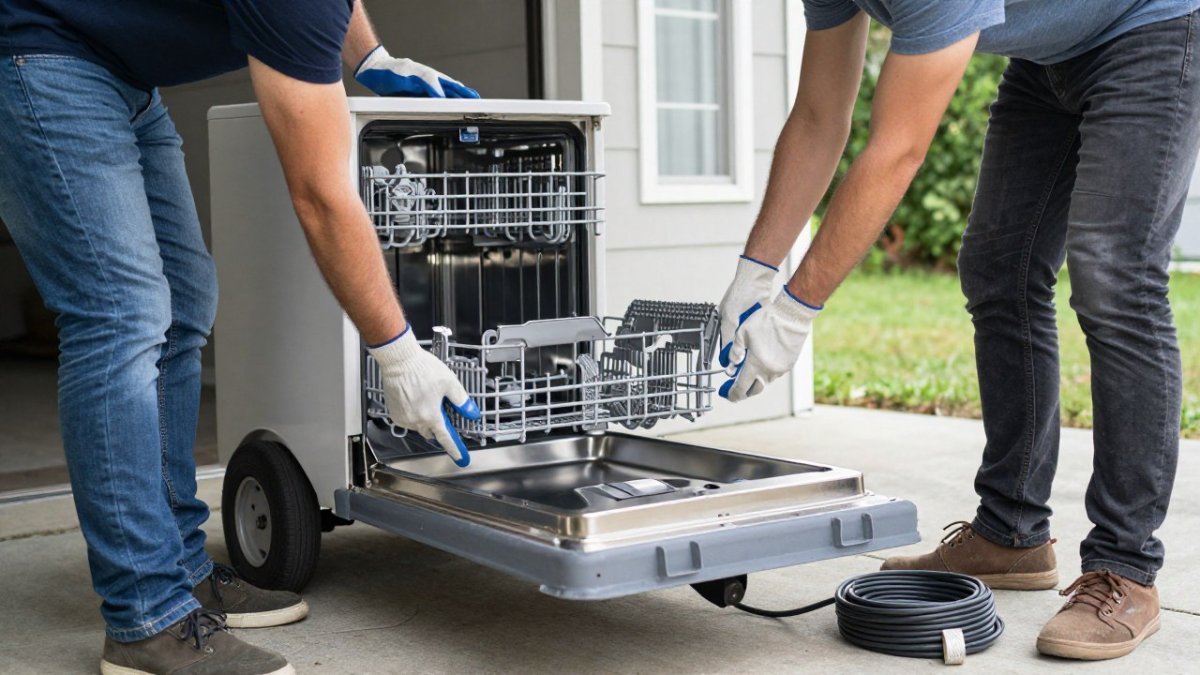
Protect yourself first. Wear closed-toe shoes and work gloves. Keep children and pets away from the work area. Clear a path through the house and out the door before you start, and use a dolly, straps, and at least one helper for heavy items.
Know which components need certified handling. Refrigerators, freezers, air conditioners, dehumidifiers, and water coolers contain refrigerant, which is regulated under federal law and generally must be recovered by a certified technician. Do not cut refrigerant lines, remove compressors, or vent gas yourself.
Handle batteries and other small hazards separately. Many small appliances contain lithium-ion or nickel-cadmium batteries. Remove them before recycling and take them to a battery drop-off or household hazardous waste site. Never puncture, crush, or put a lithium battery in the regular trash, because it can start a fire in a truck or at a facility (the EPA).
Stabilize the appliance for transport. Tape doors shut so they do not swing open, and secure any loose cords or hoses. For a front-load washer, reinstall the transit bolt if you have it; without it, the drum can slam around and damage the machine further.
Watch out: If you see a burning smell, smoke, water damage, or a cracked housing, stop and treat the unit as hazardous waste rather than a standard pickup item. Your municipal solid waste office or household hazardous waste facility can tell you whether the item needs special handling.
!Two people carefully tipping a dishwasher onto a hand truck in a driveway, wearing gloves, with the power cord coiled and taped nearby
Booking Your Pickup and Clearing Out the Appliance with Rubbish Outlaw
If you would rather not haul the appliance yourself, Rubbish Outlaw Junk Removal can help with appliance removal as part of a larger cleanout. Our team serves Akron and Canton and handles large junk removal and property cleanout jobs. To get started, request a free estimate online or contact our team with questions about your appliance.
When you book, have these details ready:
- The type and approximate size of each appliance
- Whether the unit is working, broken, or missing parts
- The pickup address and any access issues, like stairs or a narrow driveway
- Any other items you want removed at the same time
Before the crew arrives, clear a path and move any loose items out of the way. Once the appliance is loaded, ask for confirmation that it has been taken for recycling or disposal.
Rubbish Outlaw Junk Removal helps Akron and Canton homeowners clear out broken appliances quickly and safely. Our team handles the heavy lifting, so you can reclaim your space without the hassle. Request your free estimate today and we will tell you exactly what it will take to get the job done.
Frequently Asked Questions
What should I do with appliances that don't work?
Start by deciding whether the appliance is worth repairing. If a repair costs more than half the price of a comparable new unit, recycling or removal is usually the better choice. If the appliance still runs or has only a cosmetic problem, a local charity or resale shop may accept it. For units that cannot be repaired or resold, use a recycling center, a retailer haul-away program, a municipal bulky-waste collection, or a paid junk removal service. Never leave a broken appliance on the curb unless your city confirms it will be collected.
Does Home Depot take away old appliances?
Home Depot's appliance haul-away service is typically offered when you buy a new appliance for delivery, and the store may remove your old unit at that time. Policies, fees, and availability vary by location and product, so confirm the details with your local store before scheduling. Rubbish Outlaw Junk Removal may be able to help with appliance removal as part of a cleanout, and pricing depends on the item, quantity, and access. Contact us for a free estimate.
Can broken appliances be recycled?
Yes. Most large appliances contain steel, copper, and aluminum that can be recovered by scrap and recycling facilities. Refrigerators and air conditioners contain refrigerant that must be removed by a certified technician before recycling, so these units should be taken to a facility equipped to handle them. Many municipalities, scrap yards, and electronics recyclers accept broken appliances, and some offer free pickup when you call ahead.