 how-to
7 Hazardous Waste Disposal Steps Most People Get Wrong
Last Updated: October 30, 2026
Quick Summary
Hazardous waste disposal starts with identifying products that are toxic, flammable, corrosive, or reactive by their label signal words, then taking them to a local household hazardous waste drop-off facility or collection event. Never pour chemicals down a drain or put batteries, paint, or solvents in the trash or recycling bin.
- Household hazardous waste is any leftover product that is toxic, flammable, corrosive, or reactive.
- The EPA's four signal words are Danger or Poison, Warning, Caution, and Flammable, corrosive, toxic, or reactive.
- Harden latex paint with paint hardener or cat litter, but oil-based paint is always hazardous.
- Tape the terminals of lithium and 9-volt batteries with clear tape before transport.
- Business-generated hazardous waste cannot go to household collection events or standard dumpsters.
Table of Contents
- Why Hazardous Waste Disposal Goes Wrong in the First Place
- How to Tell If a Product Counts as Household Hazardous Waste
- Hazardous Waste Storage and Handling Before Collection Day
- Where to Dispose of Hazardous Waste: Drop-Off, Events, and Pickup
- How to Dispose of Paint and Chemicals Without Breaking the Rules
- What Never Goes in the Trash, Drain, or Recycling Bin
- Commercial Hazardous Waste Disposal: How Business Rules Differ
- Book a Free Estimate Before Your Cleanout Day
- Frequently Asked Questions
Why Hazardous Waste Disposal Goes Wrong in the First Place
Most people who get hazardous waste disposal wrong are not careless. They are guessing.
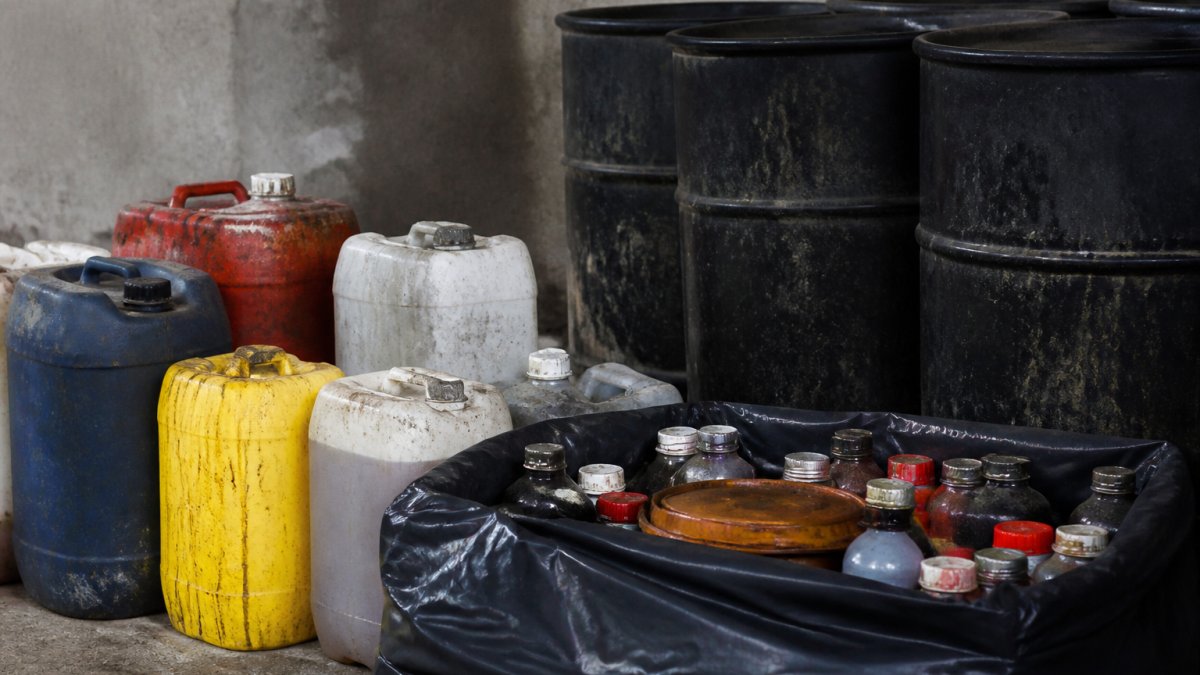
The results of that guessing game are familiar to anyone who clears out a garage or basement: mystery liquids, cracked containers leaking onto shelves, and homeowners who want to do the right thing but have no idea where to start.
The fix is a simple process. Below, we walk through the seven steps that separate a safe cleanout from a mess you have to pay to fix later.
How to Tell If a Product Counts as Household Hazardous Waste
Household hazardous waste is any leftover product that is toxic, flammable, corrosive, or reactive, which means it can poison people, catch fire, eat through metal, or explode under pressure. (the EPA) If a product carries a warning signal on the label, treat it as hazardous until you confirm otherwise.
Common household hazardous waste includes:
- Oil-based paint, stain, and varnish
- Paint thinner, solvents, and degreasers
- Pesticides, herbicides, and fertilizer
Signal Words to Look For on the Label
The EPA's household hazardous waste guidance uses four signal words on product labels. Any one of them means the product needs special handling:
- Danger or Poison: the highest hazard level
- Warning: moderate hazard
- Caution: lower hazard, still not trash-safe
Read the back of the can, not the front. The front sells the product. The back tells you how to get rid of it.
Hazardous Waste Storage and Handling Before Collection Day
Keep hazardous materials in a cool, dry place, out of reach of children and pets, and away from heat sources, food, and anything that could spark.
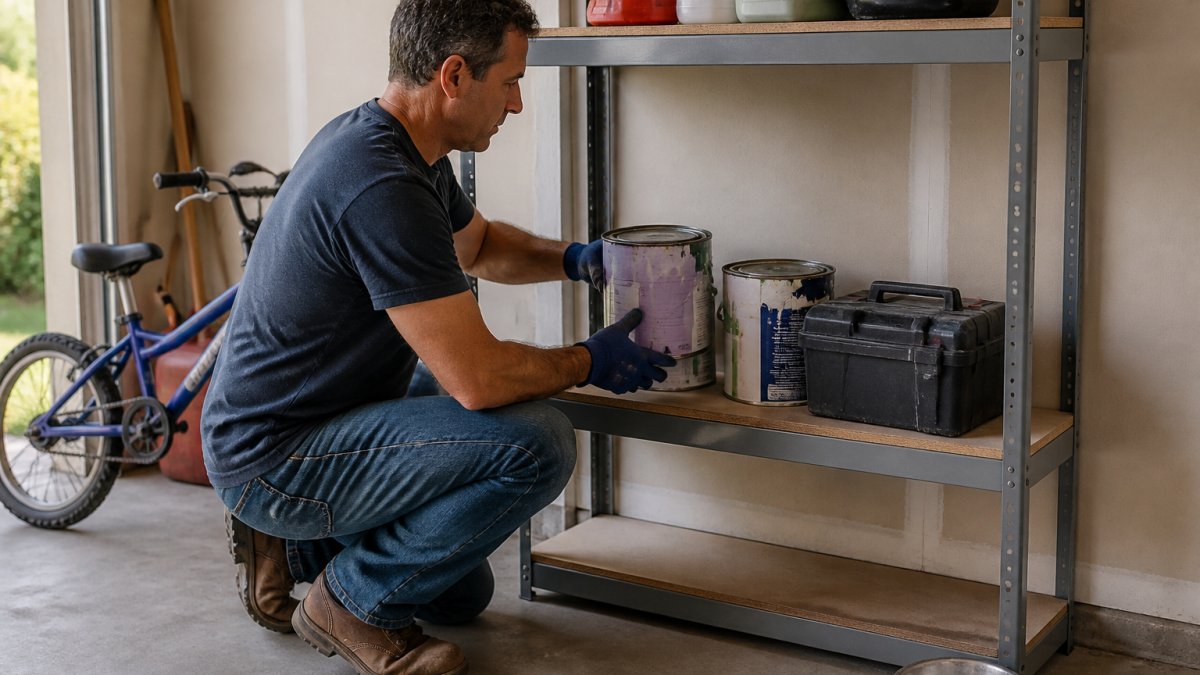
A few storage rules that prevent most accidents:
- Keep products in their original container with the intact label facing out
- Never transfer chemicals into food or drink containers
- Set containers inside a plastic tub to catch drips
What to Do With Leaking or Damaged Containers
A leaking container is an emergency, not a chore. Move it outdoors to a well-ventilated spot away from flames, and set it inside a larger plastic container that can hold the spill.
Watch out: never tape over a cracked container and hope it holds.
If a container is bulging, hissing, or smoking, do not touch it. Leave the area and call your local fire department's non-emergency line.
Where to Dispose of Hazardous Waste: Drop-Off, Events, and Pickup
The right place to dispose of hazardous waste depends on where you live, because collection programs are run locally.
Here is how to find yours:
- Search your county or city waste authority website for "household hazardous waste" and your ZIP code.
- Check for a permanent drop-off facility run by the county, often open on set days each month.
- Look for one-day collection events held in spring and fall, usually free for residents.
- Ask about curbside or appointment pickup if your area offers it for seniors or disabled residents.
- Confirm eligibility and limits before you load the car, since many sites cap how much they accept per visit.
Bring proof of residency, such as a utility bill or driver's license. Most programs only serve their own county.
For a full property cleanout that includes hazardous items, contact our team and we will point you to the right drop-off site or handle the haul-away.
How to Dispose of Paint and Chemicals Without Breaking the Rules
Paint and chemicals are the two items people get wrong most often, and the right route depends on the product, not the container. Use this item-by-item breakdown before you load the car.
Paint: Latex vs. Oil-Based
Latex (water-based) paint is not usually hazardous once it is fully dried.
Oil-based paint, stain, varnish, and shellac are always hazardous and belong at a household hazardous waste drop-off or collection event. Keep the original label intact so staff can identify the product.
Aerosol paint cans that still spray or hold pressure are hazardous. Do not puncture or toss them in the trash.
Solvents, Thinners, and Degreasers
Paint thinner, mineral spirits, acetone, and degreasers are flammable and should never go down a drain or into a trash bag. Keep them in the original container with the lid tight. If you have only a small amount left, some drop-off sites accept it; do not mix different solvents together, because mixed waste may be refused. Never use one container to hold a different chemical, even if you relabel it.
Pesticides, Herbicides, and Fertilizer
These products are regulated differently from paint and solvents, and many collection programs accept them only on specific days or with advance notice. Keep the original label and do not open the container to "use it up" on the lawn. If the product is banned or restricted, the drop-off staff will route it separately. Never pour pesticides down a storm drain or into a septic system.
Batteries and Electronics
Single-use alkaline batteries are accepted with regular trash in many areas, but rechargeable batteries, lithium-ion batteries, car batteries, and button-cell batteries are hazardous and should go to a drop-off site or a retailer that accepts them. Tape the terminals of lithium and 9-volt batteries with clear tape before transport to prevent short circuits. Fluorescent bulbs contain mercury and should not be thrown in the trash; many hardware stores and county facilities accept them.
Medications
Do not flush medications unless the label or a pharmacist specifically says to. Most communities have take-back kiosks at pharmacies or police stations, and the DEA take-back program publishes periodic collection events. Keep medications in their original packaging and remove or redact personal information before drop-off.
Automotive Fluids
Motor oil, antifreeze, brake fluid, and transmission fluid are hazardous and should go to a drop-off site or a participating auto parts store. Never mix antifreeze with other fluids, and never pour any of them on the ground or into a drain.
For a deeper walkthrough on paint specifically, our guide on safe disposal of old paint covers hardening, labeling, and what your county will and will not take.
The right route depends on the product, not the container, so use this item-by-item breakdown before you load the car.
| Item | How to dispose of it | Key rule |
|---|---|---|
| Latex (water-based) paint | Harden with paint hardener or cat litter, then check county rules | Never pour liquid latex down a drain |
| Oil-based paint, stain, varnish, shellac | Household hazardous waste drop-off or collection event | Always hazardous; keep original label intact |
| Aerosol paint cans | Drop-off if still pressurized; confirm empty cans locally | Do not puncture or toss in the trash |
| Solvents, thinners, degreasers | Drop-off site; keep lid tight in original container | Never down a drain; do not mix solvents |
| Pesticides, herbicides, fertilizer | Collection programs, often specific days or advance notice | Never pour down a storm drain or septic system |
| Rechargeable, lithium, car, button-cell batteries | Drop-off site or retailer that accepts them | Tape lithium and 9-volt terminals before transport |
| Fluorescent bulbs | Hardware stores and county facilities that accept them | Contain mercury; not in the trash |
| Medications | Pharmacy or police station take-back kiosks | Do not flush unless label or pharmacist says so |
What Never Goes in the Trash, Drain, or Recycling Bin
Some items cause real damage the moment they leave your house the wrong way. Keep this list on the fridge.
- Never pour chemicals down a drain, toilet, or storm sewer
- Never put batteries, paint, or solvents in the recycling bin
- Never toss aerosol cans in the trash while pressurized
Watch out: pouring a solvent down the drain can contaminate groundwater and damage your local water system.
Commercial Hazardous Waste Disposal: How Business Rules Differ
Businesses play by different rules than households, and the difference is not just paperwork. A homeowner can drop off a few paint cans at a county event.
The practical split comes down to three questions:
- Who generated the waste? Waste from a household is generally eligible for household hazardous waste programs. Waste from a business, landlord, contractor, or property manager is usually classified as commercial or industrial waste, even if the material is identical to what a homeowner would drop off.
- How much is there? Many household programs cap quantities per visit and per month. A business clearing a tenant unit may exceed those caps quickly, which pushes the job into the commercial channel.
- How is it transported? Household drop-off assumes you are carrying materials in your own vehicle. Commercial hauling often requires a registered transporter and a manifest that tracks the waste from pickup to final disposal.
That difference matters for landlords, contractors, and property managers clearing units between tenants. Old paint, solvents, and batteries left behind by a tenant are your problem now, and they cannot go to the curb.
If you are unsure which channel applies, start with your county waste authority and ask whether the material qualifies as household hazardous waste or commercial hazardous waste. They will tell you which program accepts it and what documentation you need.
Our guide on junk removal services for businesses explains how commercial cleanouts are scoped and scheduled.
Book a Free Estimate Before Your Cleanout Day
Here is the part most people skip: planning the haul before the pile gets out of control.
We handle garage, basement, estate, and hoarder house cleanouts across the area, along with demolition, debris removal, and boat removal.
For prep steps before the crew arrives, read our guide on how to prepare for a cleanout.
Ready to clear the space? Book a free estimate and we will scope the job, separate the hazardous items, and haul the rest.
Frequently Asked Questions
Can hazardous waste be put in the regular trash?
No. Items like paint, batteries, pesticides, and solvents can ignite in a garbage truck, leak into soil, or contaminate groundwater at a landfill. Most municipal trash haulers will refuse or fine you for putting them curbside. Instead, take them to a household hazardous waste collection event, a drop-off facility, or a transfer station that accepts them. If a container is leaking, seal it inside a larger plastic container first and keep it out of the regular trash entirely.
Where should hazardous waste be disposed of?
Start with your county's solid waste district or environmental services office, which publishes collection events and permanent drop-off sites. Many areas also run a transfer station that accepts household hazardous waste on set days. Retailers sometimes take back batteries, paint, and automotive fluids. For large volumes, a scheduled pickup service can handle transport. Never pour liquids down a drain or storm sewer, and never leave containers at a closed facility gate.
How should I store hazardous waste before disposal?
Keep products in their original container with the intact label so staff can identify them. Store them in a cool, dry place out of reach of children and pets, and never combine different chemicals into one jug. Line a sturdy plastic tub with newspaper to catch drips, and keep it off the floor in case of flooding. If a container is cracked, place it inside a second plastic container and label it clearly as damaged.
What should you do if hazardous waste spills?
Get people and pets out of the area and open windows if you are indoors. Do not wipe up unknown chemicals with household towels or vacuum them. For small spills, use absorbent material like kitty litter or sand, then scoop it into a plastic bag and take it to a collection site. For large spills, fumes, or anything you cannot identify, call your local fire department or environmental agency rather than handling it yourself.
If your garage or basement has become a holding zone for paint cans, batteries, and mystery jugs, you do not have to sort it alone. Rubbish Outlaw Junk Removal offers fast, affordable cleanouts with demolition and debris removal included, and we serve homeowners, landlords, and estate executors across the region. Get started with Rubbish Outlaw Junk Removal and reclaim your space with one call.