 how-to
How Do You Clear Out an Estate Without Losing Your Mind?
Last Updated: November 1, 2026
Quick Summary
An estate cleanout starts with confirming your legal authority as executor before removing anything, then follows a written room-by-room checklist using four categories: keep, donate, sell, and toss. A typical full-house cleanout takes one to four weeks, so book donation and hauling pickups early to avoid delays.
- Confirm executor authority with the probate court before giving away, selling, or trashing anything.
- Photograph each flagged valuable on a neutral background and record maker's marks and serial numbers.
- A licensed appraiser is usually only worth the fee on the flagged pile, not the whole house.
- Never put ammunition, propane tanks, or lithium batteries in a rented dumpster.
- Call estate cleanout services when volume, timeline, or heavy debris exceeds what you can handle.
Table of Contents
- Start With the Legal Side Before You Touch a Box
- Your Estate Cleanout Checklist: A Room-by-Room Plan
- What to Do With Belongings After Someone Dies
- How Long Does an Estate Cleanout Take?
- Handling Hazardous Materials and Awkward Items
- When to Call Estate Cleanout Services
- Get a Free Estimate and Reclaim the Property
- Frequently Asked Questions
Start With the Legal Side Before You Touch a Box
Most people start how to clear out an estate by grabbing trash bags. That's the wrong first move.
If you're the executor, your power comes from the will or from a court appointment. Until that's settled, you shouldn't give away, sell, or trash anything.
A few things to confirm before boxing anything up:
- Read the will and any trust documents.
- Confirm your executor authority with the probate court.
- Locate the deed, titles, and insurance policies.
- Photograph rooms before you change them.
- Check whether specific items were promised to specific people.
This step protects you. An angry relative can challenge a cleanout that skips it.
The emotional weight hits here too, not later. If grief is making decisions hard, how to handle estate cleanout emotional stress offers coping strategies before you sort a single drawer.
Your Estate Cleanout Checklist: A Room-by-Room Plan
An estate cleanout checklist is a written plan that walks you through each room, sets a sorting system, and tracks what leaves the property. It turns an overwhelming house into a series of small, finishable tasks.

Build the plan before the boxes. A simple version:
- Set a deadline. Pick a target date and work backward.
- Make a sorting system. Use four categories: keep, donate, sell, toss.
- Start with documents. Secure papers before anything else.
- Work room by room. Finish one space before moving on.
- Bag trash as you go. Don't let it pile up.
- Label every box. Write the room and contents on top.
The four-category system is the backbone. Every item gets a decision, and nothing sits in limbo.
What to Do With Belongings After Someone Dies
Belongings fall into four buckets: keep, give to family, sell, or donate and dispose. The hard part isn't the categories. It's the sentimental items that don't fit neatly anywhere, and the valuables you can't reliably price on your own.
Start with the items named in the will. Those go to their listed people, no debate. Then let family members claim keepsakes before you sell or donate anything.
A Repeatable Valuation and Disposition Workflow
A five-pass system can keep decisions consistent and documented if a beneficiary later asks questions:
- Triage by room. Walk each room with a clipboard or phone note and assign every item to one of five dispositions: keep (estate or heir), sell, auction, donate, or dispose. Don't move anything yet, just record.
- Flag candidates for valuation. Anything that looks like fine jewelry, watches, sterling silver, artwork, musical instruments, firearms, coins, stamps, sports memorabilia, designer handbags, or vintage electronics gets a colored sticker and a photo. These are the items where a wrong guess is expensive.
- Document before you move. Photograph each flagged item on a neutral background with a ruler or coin for scale, note any maker's marks, signatures, serial numbers, or hallmarks, and record where it was found. This photo log becomes your inventory and your paper trail.
- Get the right opinion. For most households, a licensed appraiser is only worth the fee on the flagged pile, not the whole house.
- Match the item to the channel. High-value, niche, or bulky items usually do best at a specialty auction house that already has buyers for that category. Mid-value household goods move through estate sales or online marketplaces. Everyday items go to donation. Broken or unsellable items go to disposal.
Choosing the Right Disposition Channel
| Item type | Best first channel | Why |
|---|---|---|
| Fine jewelry, watches, silver | Specialty auction or credentialed appraiser | Buyer pool and authentication matter |
| Artwork and antiques | Regional auction house | Condition reports and provenance |
| Furniture and housewares | Estate sale or online marketplace | Local pickup reduces hauling |
| Clothing and small goods | Donation | Tax receipt and fast removal |
| Vehicles, boats, firearms | Specialty dealer or licensed buyer | Most general services won't handle them |
| Broken, stained, or incomplete | Disposal or recycling | No resale value, and donation centers may refuse |
Sentimental Items and Family Claims
Photographs and personal papers deserve their own box. Set them aside early so they don't get lost in the shuffle. For keepsake-versus-giveaway decisions, how to sort sentimental items during cleanouts walks through the emotional calls. A common pattern is to let each family member claim a small number of keepsakes in a set order, oldest to youngest, or by drawing names, so no one feels shut out and you avoid re-litigating every drawer.
A Simple Inventory Template
You don't need software. A spreadsheet with these columns is enough: room, item description, photo file name, condition, estimated value, disposition (keep/sell/auction/donate/dispose), recipient or buyer, and date removed. Keep a printed copy in the estate file and a digital copy backed up off-site. If the estate is large enough to require a court inventory, this sheet becomes the source document.
How Long Does an Estate Cleanout Take?
A typical estate cleanout can take one to four weeks for a full house, depending on size, clutter, and how fast you make decisions. A single garage or basement might take a weekend. A packed hoarder property can stretch much longer.
Here's a realistic breakdown:
| Property Size | Typical Timeline | Main Bottleneck |
|---|---|---|
| Garage or single room | 1-2 days | Sorting decisions |
| Small apartment | 3-5 days | Donation drop-offs |
| Average family home | 1-3 weeks | Family coordination |
| Large or cluttered home | 3-6+ weeks | Volume and hauling |
Two things slow a cleanout down: waiting on family and waiting on hauling. Line up donation or hauling pickup early so the schedule doesn't stall.
Handling Hazardous Materials and Awkward Items
Some items can't go in a dumpster or a curbside bin. Old paint, batteries, propane tanks, and chemicals need special handling (the EPA). Many communities run household hazardous waste collection days, so check your local schedule first (the EPA). The same is true for a handful of categories that trip up almost every estate cleanout.
Special-Item Handling Cheat Sheet
| Item | Why it's a problem | Safe route |
|---|---|---|
| Paint, solvents, pesticides, pool chemicals | Flammable, toxic, or reactive | Household hazardous waste collection event or permanent drop-off |
| Lithium batteries, rechargeable batteries | Fire risk in trucks and landfills | Retailer take-back programs or municipal battery drop-off |
| Propane tanks, helium cylinders | Pressurized, explosive if punctured | Exchange at a retailer or hazardous waste site; never curbside |
| Medications | Controlled substances and poisoning risk | Pharmacy take-back kiosks or DEA-authorized collection sites |
| Firearms and ammunition | Legal transfer rules and safety | Licensed dealer, attorney guidance, or law enforcement per local rules |
| Computers, TVs, printers | Heavy metals and data | Municipal e-waste events or retailer recycling programs |
| Confidential records | Identity theft risk | Shred before recycling; many office supply stores offer shredding |
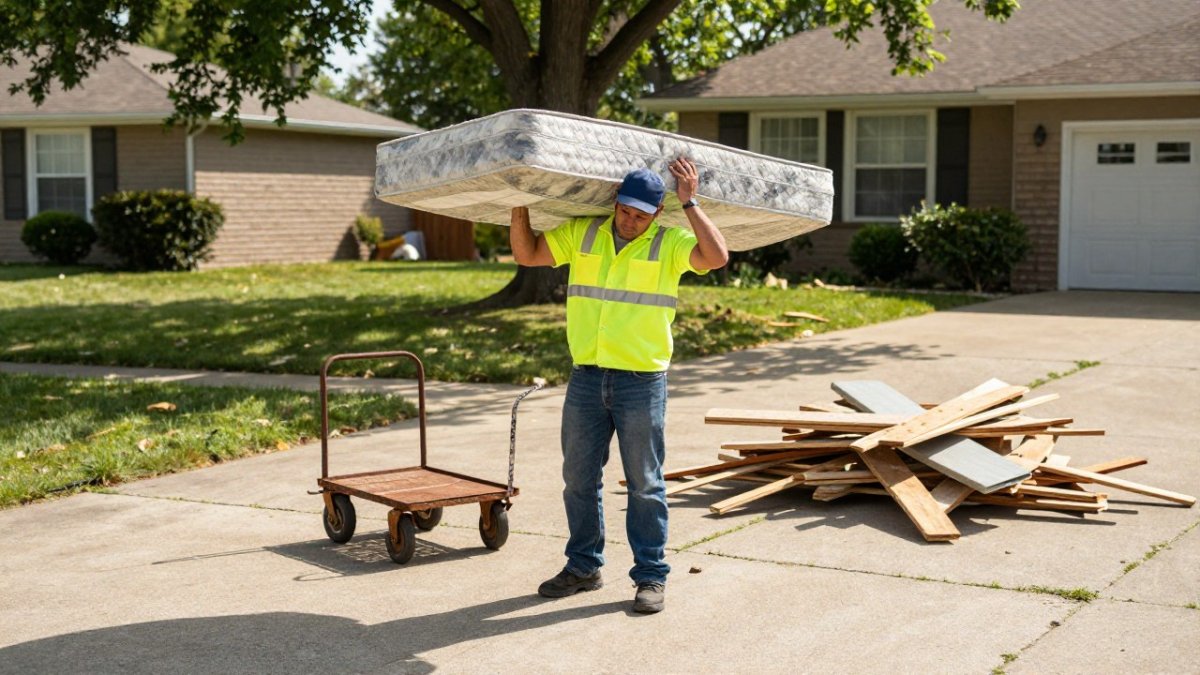
| Mattresses and appliances | Bulky, some require refrigerant recovery | Schedule bulky pickup or pay a hauler's special-item fee |
| Boats, vehicles, trailers | Title and transfer requirements | Specialty buyer or dealer; most junk services won't touch them |
Medications and Confidential Records
Don't flush them and don't leave them in a bin where they can be found. Pharmacy take-back kiosks and periodic collection events are the standard route; if none is nearby, follow the disposal instructions on the label or in the accompanying patient information. For paper records, bank statements, tax returns, medical files, shred anything with an account number, Social Security number, or signature before it goes to recycling.
Donation, Recycling, and Pickup Logistics
Disposal is not one step, it's a sequence, and the sequence is what stalls most cleanouts. A location-aware checklist:
- Call donation centers first. Ask what they accept, whether they pick up, and how far in advance you need to book.
- Separate recyclables from trash. Cardboard, metal, and clean glass usually go curbside; Styrofoam and plastic film usually don't.
- Book bulky pickup early. Municipal bulky-item pickup often requires a scheduled date and a fee per item, and slots fill up.
- Stage items by destination. Put donation items in one area, recycling in another, hazardous waste in a third, and trash at the curb. Staging prevents the wrong box from going on the wrong truck.
- Get receipts. Donation receipts support any tax deduction the estate may claim, and they document what left the property.
For a step-by-step on the paint problem, safe disposal of old paint covers what's allowed and what isn't. When in doubt, call ahead. A quick question saves a rejected load, and a rejected load can cost you a second hauling fee.
When to Call Estate Cleanout Services
Call estate cleanout services when the volume, the timeline, or the mess is more than you and a truck can handle.
Signs it's time to bring in a crew:
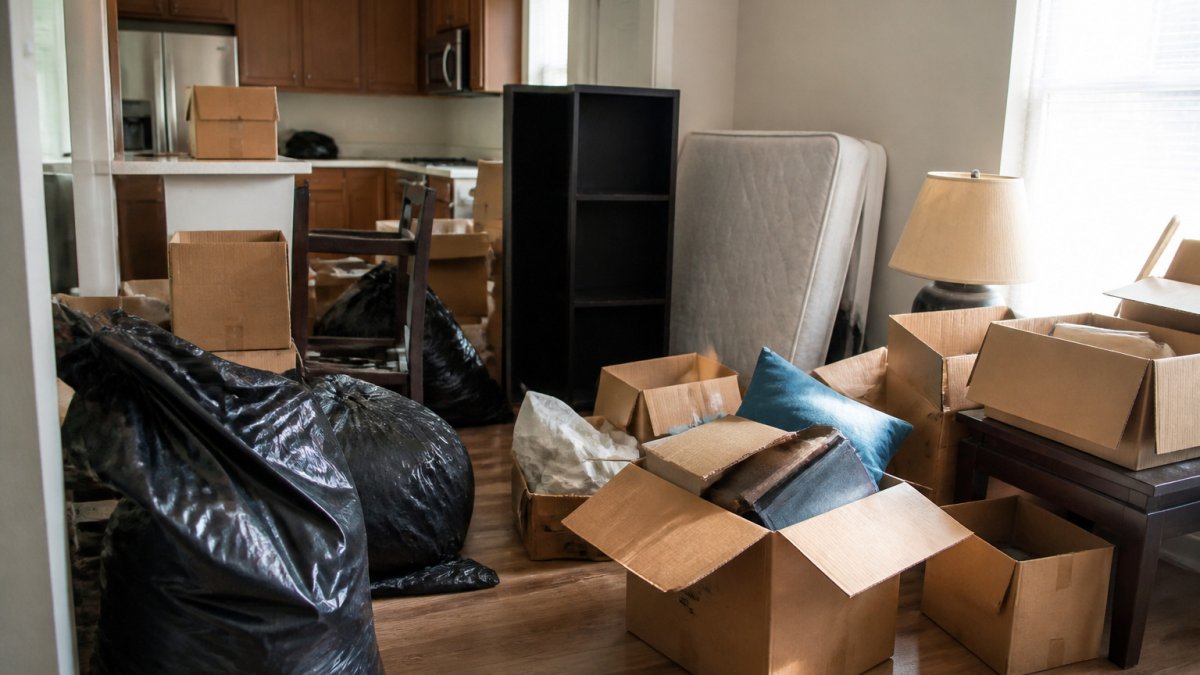
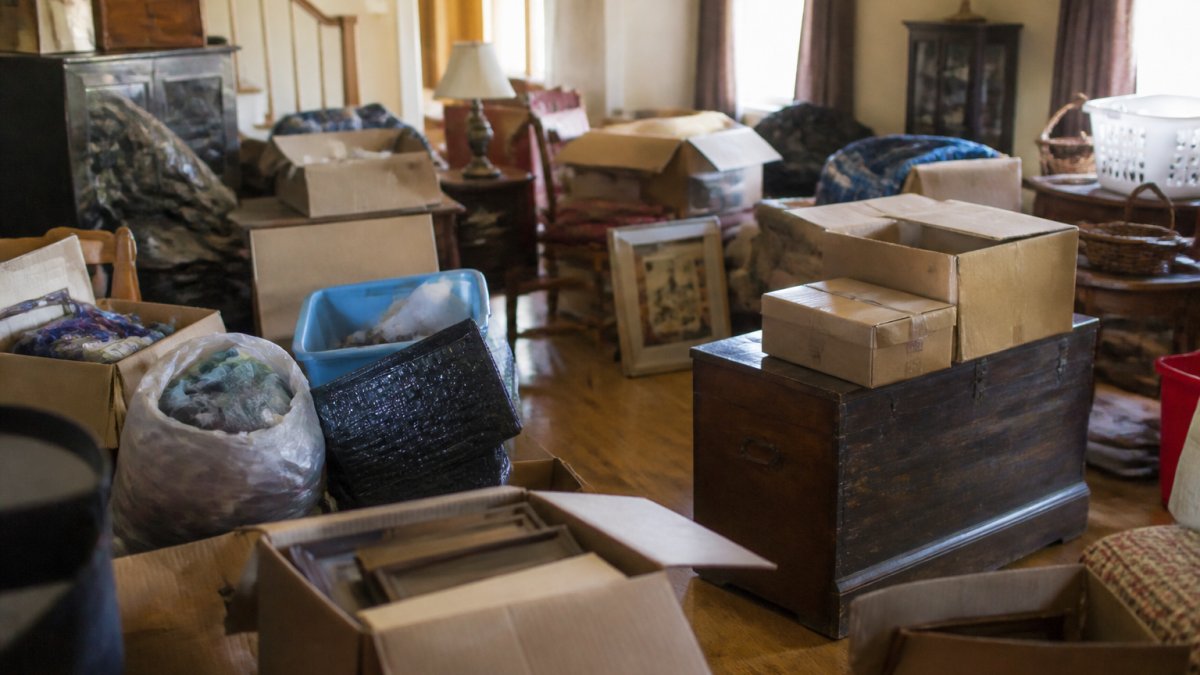
- The property is packed wall to wall.
- You need it cleared fast for a sale or new tenant.
- Heavy items or debris make it unsafe.
- You live out of town and can't manage it remotely.
Pricing depends on volume, access, and what needs special handling, so get a quote rather than guessing. Estate cleanout services handle the hauling and disposal for you. Rubbish Outlaw Junk Removal provides estate and hoarder house cleanouts, demolition, debris removal, and specialized boat removal in Akron and Canton, Ohio.
Get a Free Estimate and Reclaim the Property
The fastest way to finish a cleanout is to stop guessing and get a real number. A free estimate tells you what the job costs and how long it takes, so you can plan around it.
When you're ready, request a free estimate and get pricing for your specific property. We serve homeowners, landlords, and executors across the region, with fast turnaround and straightforward pricing.
Frequently Asked Questions
How do you start clearing out an estate?
Start with paperwork, not possessions. Locate the will, deed, insurance policies, and financial records before anything leaves the house. Then photograph each room as-is, set a realistic deadline, and sort into keep, donate, sell, and discard piles. An estate cleanout checklist keeps the process on track and prevents family disputes over who got what. If the property must be listed or transferred, confirm executor authority first so nothing is removed prematurely.
What should you do with belongings after someone dies?
Separate sentimental items from valuables and everyday household goods. Set aside photographs, jewelry, and personal papers for family review before anything is sold or donated. Furniture, clothing, and kitchenware can usually be donated or sold through an estate sale. Items with no resale value go to junk removal or disposal. Keep an inventory of what leaves the home, especially if you are the executor and need to account for personal property.
How long does an estate cleanout take?
Most estate cleanouts run one to four weeks, though heavily packed homes or hoarder situations can stretch to six to eight weeks or longer. Timeline depends on property size, how much sorting the family wants to do personally, and how quickly donation or junk removal crews can be scheduled. Setting a firm deadline and booking hauling early shortens the process considerably.
Do estate cleanout services handle hazardous items like paint and batteries?
Reputable estate cleanout services sort out hazardous materials before hauling, but old paint cans, batteries, propane tanks, and chemicals often require separate disposal through a local household hazardous waste program. Ask the crew upfront how they handle these items so nothing ends up illegally dumped. For hoarder house cleanouts, confirm the company has experience with biohazards and heavy debris before booking.
Clearing an estate is heavy work, both physically and emotionally. You don't have to carry it alone. Rubbish Outlaw Junk Removal offers fast service, affordable pricing, and full property cleanouts, including hoarder house cleanouts and debris removal. Get started with Rubbish Outlaw Junk Removal and reclaim the property without the stress.