 blog
Is Hiring Professional Cleaners Worth It for Landlords?
Quick Summary
Hiring professional cleaners is worth it for landlords when the time saved and faster turnover outweigh the cleaning fee. Landlords often underestimate how many of their own hours a unit turnover consumes. Compare the full quote against your supplies, your time, and the rent lost to vacant days.
- Ask for a written quote that lists exactly what is included and excluded.
- DIY works for a single unit with light soil and a flexible schedule.
- Hire help when units are large, heavily soiled, or needed on a fixed date.
- Each vacant day costs you the rent you would otherwise collect.
- Verify liability insurance and get a re-clean policy in writing before booking.
Table of Contents
- What Landlords Really Pay for When They Hire a Cleaner
- DIY vs. Professional Cleaning for Rental Properties
- Professional Deep Cleaning Cost: A Sample Turnover Budget
- Move-Out Cleaning for Landlords: What Has to Be Done Between Tenants
- Rental Turnover Cleaning Checklist for Your Units
- A Decision Framework Based on Property Size, Condition, and Turnover Schedule
- Vetting a Cleaner, Defining Scope, and Deciding Whether to Hire Help Next
- Frequently Asked Questions
What Landlords Really Pay for When They Hire a Cleaner
Hiring professional cleaners is worth it for landlords when the time saved and the turnover speed are worth more than the cleaning fee. Landlords often underestimate how much of their own time a unit turnover consumes. The bill covers labor, supplies, and equipment, along with the hours you would otherwise spend scrubbing, hauling, and rechecking the unit yourself.
Most cleaning quotes break down into a few core costs. The largest is labor, usually billed by the hour or by the property size. Supplies and equipment, such as degreasers, floor machines, and vacuums, are often built into the price. Some companies add separate fees for heavy soil, pet odor treatment, or same-day scheduling.
Pricing depends on the square footage, the condition of the unit, and how quickly you need it ready. Ask for a written quote that lists exactly what is included. Clarify whether appliance interiors, cabinet fronts, and window tracks are part of the scope. Vague quotes often produce surprise charges later.
DIY vs. Professional Cleaning for Rental Properties
Doing the cleaning yourself costs less in cash but more in time, and the trade-off depends on how many units you manage. A single unit between tenants may be manageable alone. Three or more units in a short window usually are not.
| Factor | DIY Cleaning | Professional Cleaning |
|---|---|---|
| Cash cost | Supplies and equipment only | Labor plus supplies |
| Time required | Often a full weekend or longer per unit | Typically completed in a day |
| Consistency | Depends on your standards and energy | Follows a defined scope |
| Hidden costs | Rentals, return trips, missed spots | Scope disputes if the quote is vague |
DIY works well when the unit has light soil and your schedule has room. Professional help makes more sense when the unit needs deep cleaning, when a tenant leaves heavy grime, or when you need the unit ready on a fixed date. Many landlords use a hybrid approach, handling light touch-ups themselves and hiring out the deep work.
Watch out: Skipping the professional deep clean to save money often leads to deposit disputes and repeat work. Check the unit against the lease and move-in condition before deciding what to do yourself.
Professional Deep Cleaning Cost: A Sample Turnover Budget
Most articles tell landlords that professional cleaning "pays for itself" without showing the math. Rather than relying on rough price ranges, build your own budget from written quotes. Pricing depends on unit size, condition, add-ons, and how quickly you need the unit ready. For current pricing or a quote, visit the Rubbish Outlaw Junk Removal website.
Now put that next to the DIY side. If you clean the unit yourself, you spend supplies plus your own time, and that time has a value you can estimate for your situation.
The line most landlords forget is vacancy cost. Each vacant day costs you the rent you would otherwise collect. A professional crew that finishes in one day rather than several can recover rent that would otherwise be lost to vacancy.
Property size scales the math. Heavy soil, pets, smoke residue, or a unit left full of belongings can increase the cost and may require a cleanout before cleaning begins.
Watch out: A low bid that excludes appliance interiors, cabinet fronts, and window tracks may not be a true bargain. Add those line items back in before you compare quotes.
To make this budget usable, fill in your own numbers for rent per day, your hourly value, and local quotes, then compare the total professional cost against supplies plus your time plus vacancy days. The professional side wins when the vacancy savings and your time value together exceed the fee.
Move-Out Cleaning for Landlords: What Has to Be Done Between Tenants
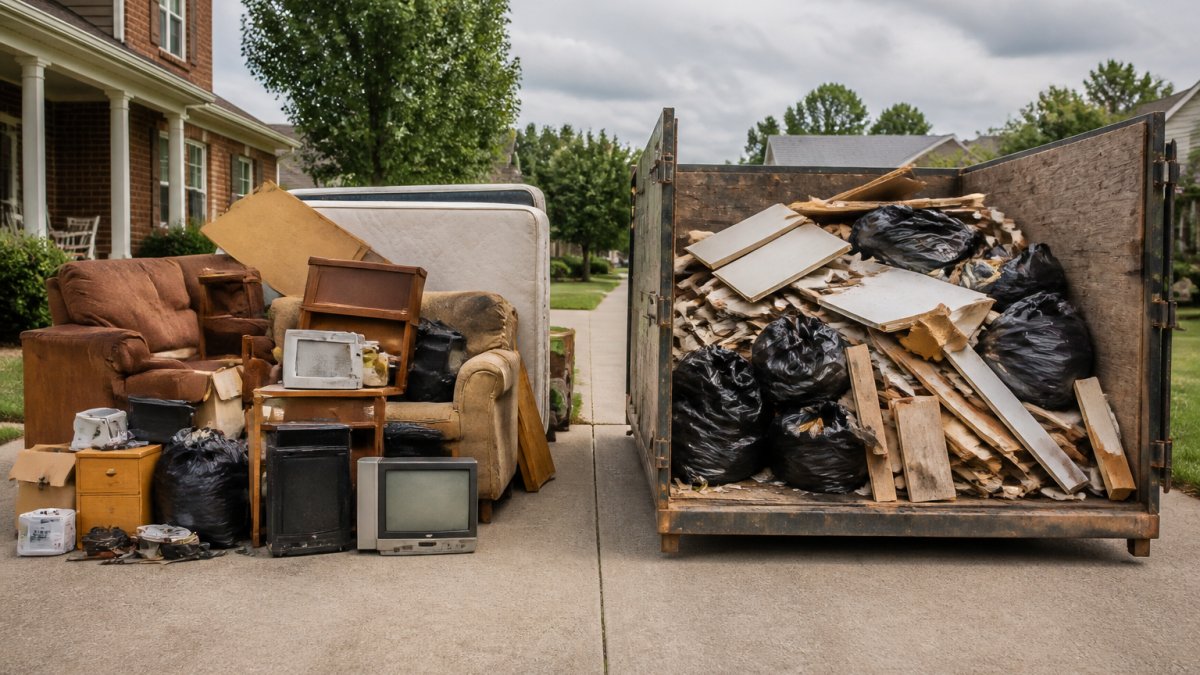
Move-out cleaning should return the unit to a rentable state. That usually means removing trash, cleaning kitchens and bathrooms, and addressing floors and walls. Some situations, such as an eviction or a unit left full of belongings, require a larger cleanout first. If a tenant left items behind, the process may need to be handled as a cleanout service before a standard clean can begin.
A typical scope covers cabinets inside and out, appliances, bathroom fixtures, floors, baseboards, light fixtures, and window sills. Walls often need spot cleaning where scuffs or grease have built up. Keep before-and-after photos to document condition for any deposit decision.
Check your lease and local rules before deducting cleaning costs from a deposit. Requirements for itemized statements and deadlines vary by state, so confirm the rules that apply to your property.
Rental Turnover Cleaning Checklist for Your Units
A consistent checklist keeps turnovers fast and predictable. Use it for every unit so no step gets skipped.
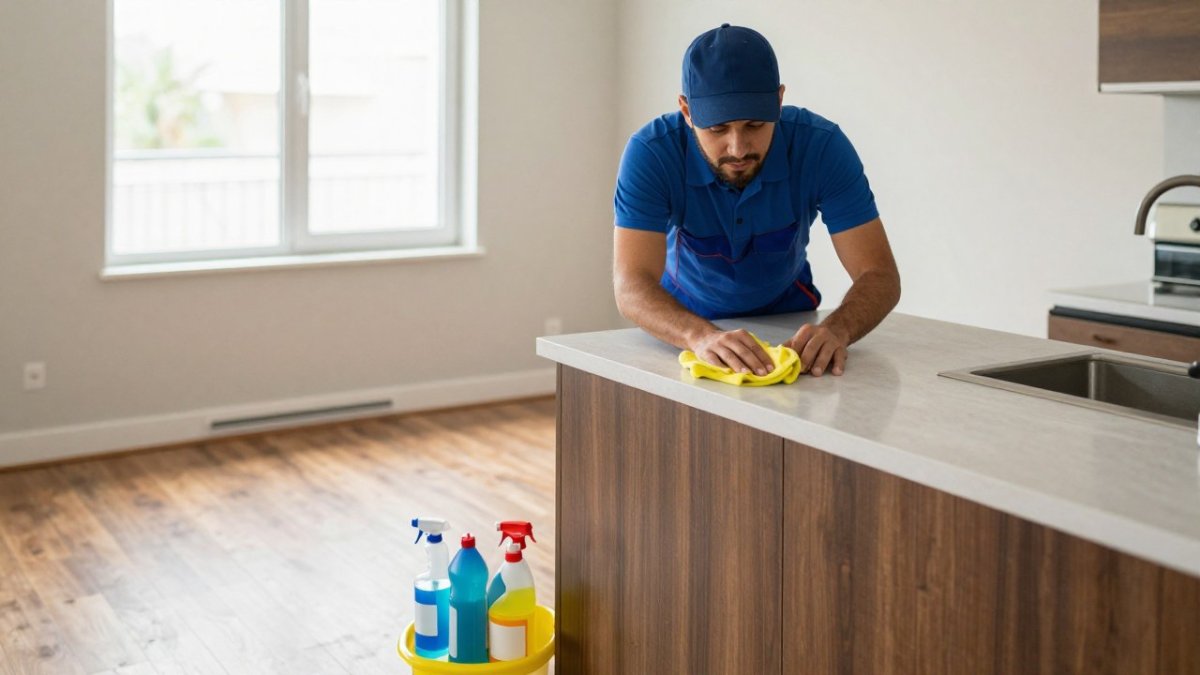
- Remove all trash, unwanted items, and tenant leftovers
- Clean kitchen cabinets, counters, sink, and appliance interiors
- Clean bathroom tub, toilet, sink, mirrors, and exhaust fan
- Vacuum and mop all floors; spot-treat or extract carpet
- Wipe baseboards, door frames, and light switches
- Clean windows, tracks, and sills
- Check for pest activity and address any issues
- Photograph each room for your records
Adjust the list to match your property type and any amenities. Share the checklist with any cleaner you hire so both sides work from the same scope.
A Decision Framework Based on Property Size, Condition, and Turnover Schedule
Use three questions to decide whether to hire help. First, how large is the unit? Larger units take longer, and the time cost rises quickly. Second, what condition is the unit in? Light wear is manageable alone, while heavy soil or odor usually calls for professionals. Third, how tight is your turnover window? A short gap between tenants makes outside help more valuable.
If the unit is small, in fair condition, and you have a few days, handling it yourself often makes sense. If the unit is large, heavily soiled, or needed within a day or two, hire help. Many landlords find that outsourcing the deep clean while doing light touch-ups keeps costs reasonable.
Vetting a Cleaner, Defining Scope, and Deciding Whether to Hire Help Next
Vetting is where landlords lose money, not in the cleaning fee itself. A cheap cleaner without insurance or a written scope can cost more in damaged fixtures, missed items, and re-clean visits than a higher-priced, well-documented provider.
Start with four checks before you book anyone:
- Liability insurance and bonding: Ask for a certificate of insurance and confirm the policy is current. If a cleaner damages a countertop or breaks a window, an uninsured provider may leave you holding the bill.
- References from other landlords: Ask for references from rental-property owners, not just homeowners. Turnover cleaning has different expectations than residential cleaning.
- Background checks and staffing model: Ask whether cleaners are employees or subcontractors and whether background checks are run. This affects consistency and your liability exposure.
- Re-clean policy: Get the re-clean window and what qualifies in writing. A provider that will return for missed spots at no charge is worth more than one that charges for a second visit.
Scope is the other half of risk control. Put the following in writing and have both sides sign off:
- Room-by-room checklist with inclusions and exclusions (for example, "inside oven included; inside refrigerator not included unless added")
- Add-on pricing for appliances, cabinets, carpet extraction, and heavy soil
- Access instructions: lockbox code, key handling, alarm codes, and who is on site
- Photo documentation: before-and-after photos of each room, especially for deposit disputes
- Damage and breakage procedure: who is notified, how it is documented, and how claims are handled
- Trash and debris removal: whether hauling is included or requires a separate cleanout service
- Scheduling and cancellation terms, including rush fees and no-show policies
A practical pattern many landlords use is to book a trial clean on one unit before committing to a recurring arrangement. That single job reveals whether the crew shows up on time, follows the checklist, documents with photos, and handles add-ons without surprise charges.
Watch out: Verbal promises about "deep cleaning" or "everything included" do not survive a dispute. If it is not in the written scope with a price, assume it is excluded.
Once you have a written scope, a certificate of insurance, references, and a quote, compare the total against your sample turnover budget. If the numbers work and the provider passes the trial, schedule the next turnover and keep the checklist and photos on file for every unit.
Frequently Asked Questions
Do landlords have to professionally clean between tenants?
No federal law requires a landlord to hire professional cleaners between tenants. The obligation that matters is usually set by state and local rules and the lease, which generally require the unit to be delivered clean and habitable. Many landlords clean the unit themselves, while others hire a cleaner for deep work such as ovens, bathrooms, and carpets. Check your state and city requirements and your lease language before deciding, and note that deductions from a security deposit must be supported by documentation.
Can landlords deduct cleaning costs from a security deposit?
Landlords in most states can deduct cleaning costs from a security deposit when the tenant leaves the unit dirtier than move-in condition, beyond normal wear and tear. Keep receipts, move-in and move-out photos, and an itemized statement, since most states set deadlines for returning the deposit with an itemized list. Routine cleaning between tenants is generally treated as a landlord expense, so deductions should be limited to cleaning needed because of the tenant's conduct.
How long does professional move-out cleaning take?
A standard move-out clean of a one- or two-bedroom apartment often takes a crew several hours, while a larger house or a unit needing deep cleaning can take a full day. Time depends on the size of the unit, the condition it is left in, and whether appliances, cabinets, and carpets need detailed work. Asking for a written scope before booking helps you compare quotes and schedule the cleaning so it does not delay the next tenant's move-in.
When should a landlord hire a professional cleaner instead of cleaning the property themselves?
Hiring a professional makes the most sense when turnovers are frequent, when the unit needs deep cleaning, or when your own time is worth more than the cost of the service. It also helps when a unit has heavy grime, pet odor, or leftover tenant belongings that take hours to clear. If you have one unit, a light schedule, and time to spare, doing the basic clean yourself may be the more cost-effective choice. Compare a quoted price against the hours you would spend and the vacancy days you would save.